Key Takeaways: No, Your Smartwatch Cannot Measure Blood Sugar Without a Sensor — Here’s the Proof
- What the regulators have actually said.
- It is worth appreciating just how difficult non-invasive glucose sensing is, because that difficulty is the whole story.
- For most gadgets, an inaccurate metric is merely annoying.
Table of Contents
- What the regulators have actually said
- Why this is so hard that even the giants have failed
- Why a fake reading is worse than no reading
- What actually works
- How to spot the fakes before you buy
- The bottom line
- The behavior shift that worries doctors
- If you have already bought one
- What a real breakthrough would have to look like
- Sources and further reading
Search for a smartwatch that measures blood sugar without a needle and you will find dozens, often under fifty dollars, promising painless, continuous glucose readings from the wrist or finger. They look convincing. They are also, as of mid-2026, uniformly incapable of doing what they claim, and for some buyers they are genuinely hazardous.
This is not cautious hedging. It is the settled position of regulators on multiple continents, and the scale of the problem is large enough that authorities have started pulling listings by the thousand. If you or someone you care for lives with diabetes, this is one health-tech claim worth understanding clearly.
This article is general information, not informational context. Anyone managing diabetes should follow the guidance of their own clinician and use devices their care team recommends.
What the regulators have actually said
The US Food and Drug Administration has issued a safety communication telling people not to use any smartwatch or smart ring that claims to measure blood glucose without piercing the skin. The agency was unambiguous: it has never authorised, cleared or approved a single non-invasive wearable that measures blood glucose on its own, regardless of brand or manufacturer. The warning applies to the entire category, not one bad actor.
Europe has gone further than warnings. In its 2025 market surveillance, Germany’s federal network agency identified more than a thousand suspicious listings, accounting for an estimated five million units, for watches that claimed to read blood sugar but were in fact simply generating or simulating numbers rather than measuring anything. Those products were flagged as non-compliant and removed from sale. The pattern is the same everywhere: a real-looking value on screen, with no real measurement behind it.
Why this is so hard that even the giants have failed
It is worth appreciating just how difficult non-invasive glucose sensing is, because that difficulty is the whole story. Glucose contributes a tiny fraction of the signal in light shone through skin, while sweat, temperature, motion and skin thickness all swamp it. One engineer described the task as finding a needle in a haystack while the haystack is moving and changing color.
The companies that have tried are not fly-by-night sellers. Google’s life sciences arm spent years on a glucose-sensing contact lens before abandoning it when the link between tears and blood glucose proved too inconsistent. Apple has reportedly run an internal glucose project for years, and as of June 2026 has shipped nothing and announced no release date. Samsung continues to work on it. When the largest technology firms on earth, with vast budgets, cannot make non-invasive glucose work, a forty-dollar watch from an unknown brand certainly has not.
Why a fake reading is worse than no reading
For most gadgets, an inaccurate metric is merely annoying. For glucose it can be life-threatening. Someone with diabetes who trusts a fabricated number might take the wrong insulin dose, and dosing errors can lead to dangerously low or high blood sugar, confusion, coma or worse within hours. Endocrinologists have reported a more subtle danger too: patients beginning to trust an authoritative-looking watch over their real monitor, and ignoring genuine symptoms because the screen looked reassuring. A device that invents a calm number is not neutral; it actively displaces the information a person needs.
What actually works
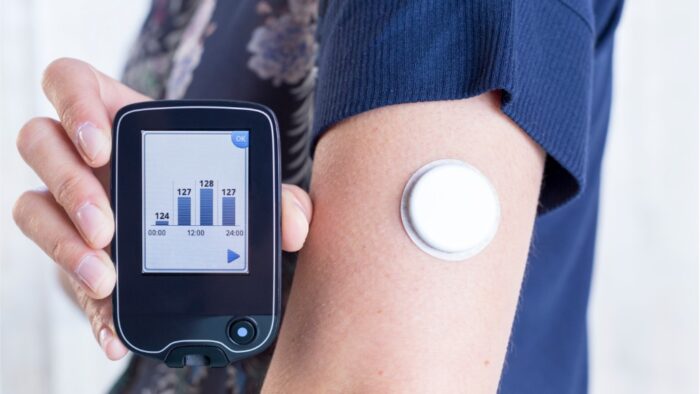
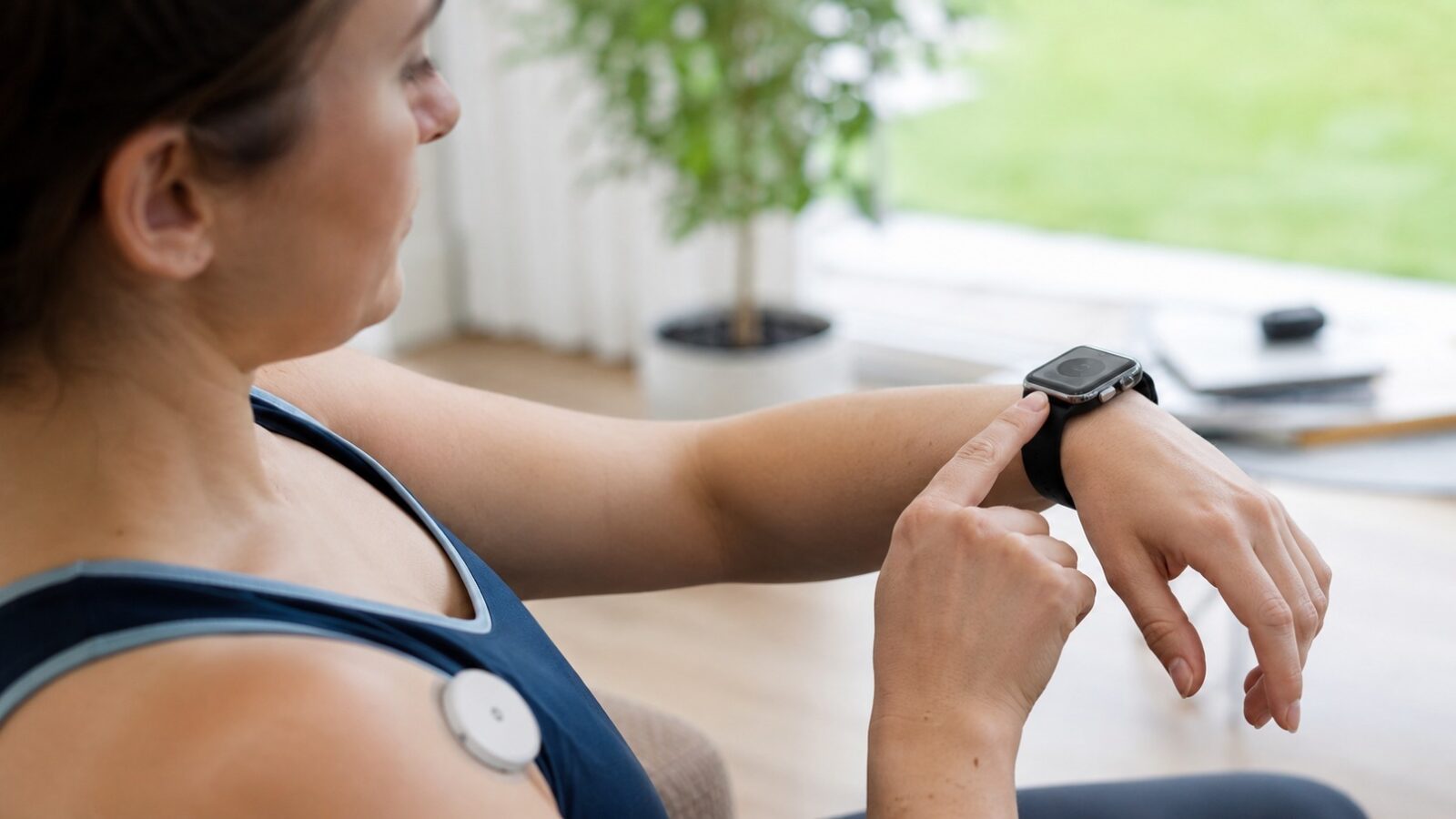
There is a real, proven technology here, and it is important not to confuse the two. Continuous glucose monitors from established medical manufacturers use a tiny sensor filament placed just under the skin and have reached clinical-grade accuracy. These are legitimate, regulated devices, and many of them can display readings on a smartwatch. That is the key distinction: a watch can be a perfectly good screen for data from a real, skin-piercing sensor; it cannot be the sensor itself. We cover the consumer side of this in continuous glucose monitors without diabetes.
How to spot the fakes before you buy
- Any claim of blood sugar measurement with no sensor, patch or skin contact beyond the watch back is a red flag, full stop.
- Implausibly low prices for a feature that bankrupts the assumptions of billion-dollar research programs.
- Vague references to ‘medical grade’ or ‘FDA’ without a specific clearance you can verify.
- A long list of unrelated vitals (glucose, blood pressure, blood oxygen, uric acid, lipids) all promised from one cheap optical sensor.
That last point is the giveaway. The same scepticism applies to any budget device promising a clinic’s worth of measurements from a single green light, a pattern we flag across smart rings for health tracking and the broader digital health trends worth watching.
The bottom line
Non-invasive glucose monitoring is one of the most sought-after goals in consumer health technology, and someday a validated version may exist. Today it does not. A watch that claims to read your blood sugar from the skin is either simulating a number or guessing, and for a person with diabetes that is not a harmless novelty. Until a real device clears regulatory review, the honest tools remain a proper continuous glucose monitor or a fingerstick meter, prescribed and supported by a clinician.
The behavior shift that worries doctors
Beyond the outright fakes, there is a subtler trend that alarms diabetes specialists. Surveys of people who use real continuous glucose monitors have found that a striking share would consider switching to a non-invasive watch if one existed, even if it were less accurate, and that some already lean on a smartwatch display as their primary glucose reference, occasionally skipping the confirmation step. Endocrinologists describe patients who have begun to trust the watch over their medical device precisely because a screen looks authoritative. When a number is presented confidently, people believe it, and with glucose that misplaced trust can be dangerous.
If you have already bought one
- Stop using any non-sensor reading to make decisions about food, activity or, above all, medication.
- If you have diabetes, return to the device your care team recommends, a real continuous glucose monitor or a fingerstick meter, and tell them what you were using.
- Keep the watch only for the features that genuinely work, such as steps and heart rate, and ignore the glucose figure entirely.
- Consider reporting a misleading product to your national regulator; that is how surveillance agencies find and remove these listings.
What a real breakthrough would have to look like
It is fair to ask what would change the picture. A legitimate non-invasive glucose device would carry a specific regulatory clearance for glucose measurement, would publish independent accuracy studies across diverse skin tones and conditions, and would come from a manufacturer willing to stake its reputation on validated performance rather than a marketplace listing. None of that exists today for a sensor-free wearable. When it does, it will be announced loudly, scrutinised heavily and priced like the serious medical technology it would be, not buried in the specifications of a cheap watch. Until then, the absence of those signals is itself the answer.