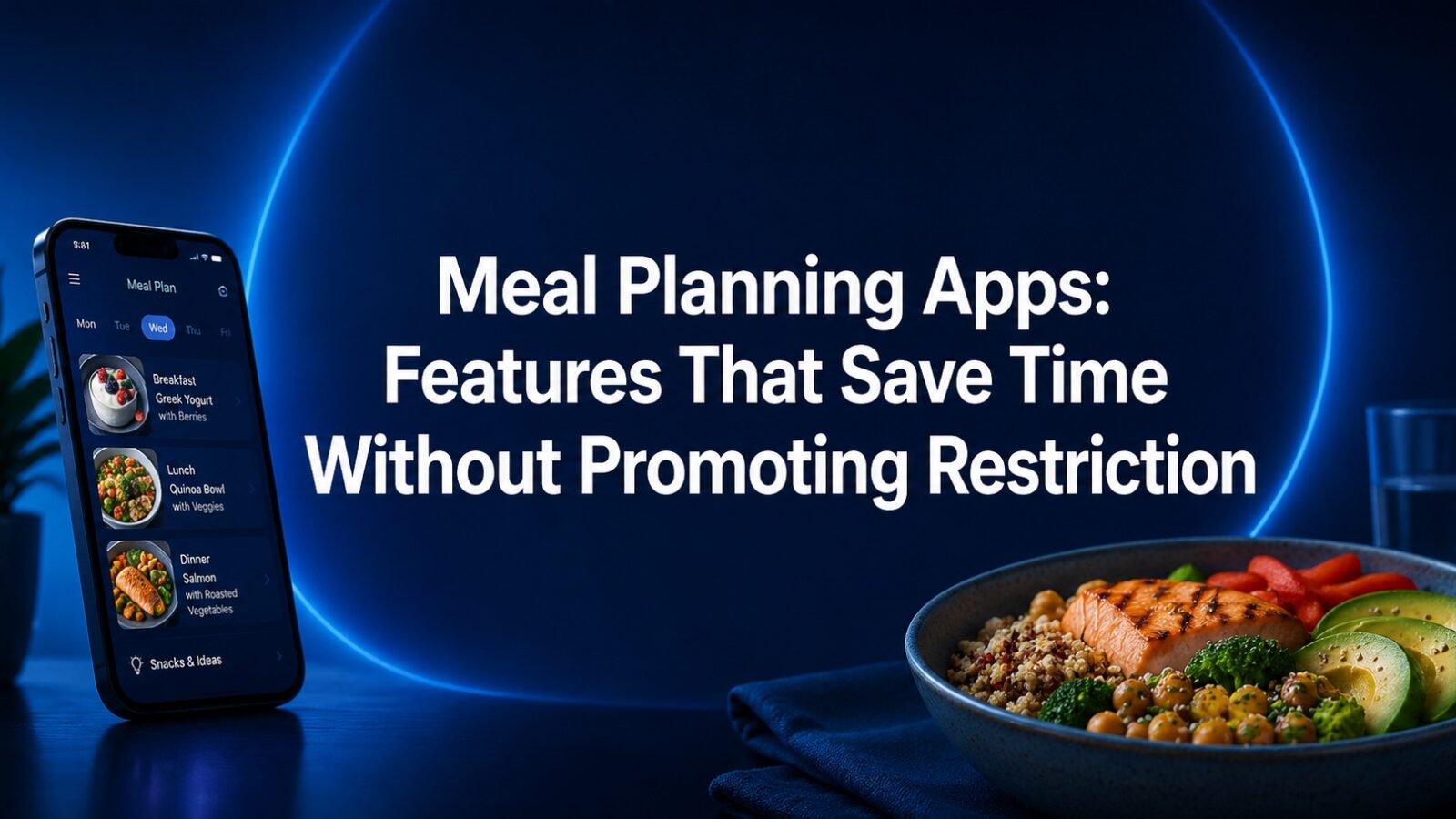
Key Takeaways: Meal Planning Apps: Features That Save Time Without Promoting Restriction
- List the practical constraints before choosing an app: number of people, cooking time, equipment, budget, leftovers, school meals, work shifts and dietary needs.
- Filters should help with genuine needs without shrinking the menu to a handful of repetitive meals.
- Nutrient estimates depend on the database, ingredient match and portion size.
Table of Contents
- Start with household logistics
- Recipe variety needs realistic filters
- Nutrition information should have a traceable source
- The app should work when the week changes
- Subscription and shopping partnerships
- A two-week test
- The best app reduces waste as well as decisions
- Meal plans should respect time and energy
- A good planner reduces decisions without narrowing the diet
- The sensible takeaway
- Match the plan to the guidelines
A good meal planning app should reduce the number of decisions involved in feeding a household. It can organize recipes, reuse ingredients and build a shopping list. Problems begin when planning quietly becomes a restrictive diet, every meal is graded or the app assumes that health looks the same for every culture, budget and body.
Start with household logistics
List the practical constraints before choosing an app: number of people, cooking time, equipment, budget, leftovers, school meals, work shifts and dietary needs. A product that ignores these details creates attractive plans that are difficult to follow.
Shared lists and calendar integration may be more useful than automated nutrient scores. The best feature is often the one that prevents duplicate shopping or answers the evening question about what can be cooked quickly.
Recipe variety needs realistic filters
Filters should help with genuine needs without shrinking the menu to a handful of repetitive meals. Look for ingredient exclusions, serving adjustments, pantry tracking and the ability to substitute foods. Recipes should use measurements and preparation steps that fit the user’s region.
Be cautious when an app labels foods clean, guilty, bad or fat-burning. Such language simplifies nutrition into moral categories and can promote unnecessary restriction.
- Check allergy controls carefully.
- Review serving-size assumptions.
- Make sure substitutions are easy.
- Keep culturally familiar foods in the plan.
Nutrition information should have a traceable source
Nutrient estimates depend on the database, ingredient match and portion size. A recipe made with a different oil, brand or serving can change the number. Prefer services that identify their data source and allow corrections.
For most households, a broad pattern matters more than perfect daily totals. Planning vegetables, protein sources, grains or other staples across the week can be more practical than chasing a single meal score.
The app should work when the week changes
Plans fail when a late meeting, illness or unexpected guest makes the schedule rigid. Look for drag-and-drop changes, leftover nights, quick meals and the ability to pause without losing the plan.
A useful app also accepts that takeaway, convenience food and repeated favourites are part of real life. Flexibility improves consistency.
Subscription and shopping partnerships
Some apps earn money from grocery delivery, sponsored products or affiliate links. That does not make the plan unusable, but recommendations should be clearly separated from paid placement. Check whether the shopping list can be exported to a normal note rather than locked to one retailer.
Review the cost after the trial. A planning app should save enough time or waste to justify an ongoing fee.
- Look for transparent sponsored content.
- Keep a copy of favourite recipes.
- Check whether family members need separate subscriptions.
- Avoid plans that require expensive speciality products.
A two-week test
Use the app for two ordinary weeks, including one busy day and one flexible day. Track how many planned meals were cooked, whether the shopping list reduced waste and whether the process felt calmer. Do not judge success by perfect compliance.
If the app increases food anxiety, spending or household conflict, the problem is not a lack of discipline. The tool may be a poor fit.
The best app reduces waste as well as decisions
Meal planning becomes more useful when it connects recipes to ingredients already in the kitchen. Pantry reminders, leftover suggestions and flexible serving sizes can prevent food from being forgotten. These features often save more money than premium nutrition scoring.
Check whether the app lets you mark staple items, reuse previous lists and change quantities without rebuilding the week. A planning tool should learn the household’s routine without turning every meal into a new project.
- Pantry-aware suggestions
- Leftover planning
- Reusable shopping lists
- Easy serving adjustments
Meal plans should respect time and energy
A plan built around cooking every night may fail during a demanding week. Look for batch-cooking options, freezer meals, shortcuts and recipes with different effort levels. Convenience foods can have a sensible place in a practical plan.
The app should also make it easy to repeat a meal. Variety is useful, but constant novelty can increase cost and preparation time.
A good planner reduces decisions without narrowing the diet
The most helpful tools reuse ingredients, account for leftovers and create a shopping list that reflects the household’s schedule. They should allow cultural foods, allergies and flexible portions instead of forcing every meal into a rigid template.
If planning increases anxiety, guilt or compensatory behavior, step back from detailed tracking. Simpler lists, repeating a few dependable meals or support from a qualified professional may be more appropriate.
The sensible takeaway
The right meal planning app saves decisions, respects household reality and leaves room for flexibility. It should support eating, not make food feel like a compliance test.
Meal planning should also leave room for appetite and changing needs. A plan is a practical map, not an instruction that must be followed regardless of hunger, illness or a change in schedule. The ability to move, skip or replace a meal without losing the whole week is a sign of thoughtful design.
Match the plan to the guidelines, not the marketing
A meal planning app is a scheduling and shopping tool, and it is at its best when it is treated as one. What it should not be is the source of your nutritional targets. The Dietary Guidelines for Americans are maintained by the US government for both the public and health professionals, and they are the reference an app ought to be implementing. Where an app’s default plan and the guidelines diverge, the guidelines are the authority.
The without-restriction framing in the title is the part that matters most for who should use these tools. An app that defaults to a calorie deficit, scores your day or gamifies compliance is not neutral, and for anyone with a history of disordered eating it can make things worse rather than better. If tracking starts to feel compulsive, the right move is to stop tracking, and any app that makes stopping feel like failure is the wrong app.
Two practical checks before subscribing. Does it handle allergens and intolerances properly, because the FDA’s food allergy material is a reminder that this is a safety question rather than a preference setting, and an app that treats an allergy as a filter on recipe suggestions is not enough on its own. And what happens to the data, given that a wellness app is generally not covered by HIPAA and the FTC has acted over health privacy claims in this market.