Key Takeaways: How to Use ChatGPT for Workout and Meal Planning Effectively
- AI chat tools are good at structure, variety and saving time, not at personalized clinical or nutrition advice.
- Give clear constraints (equipment, time, preferences, restrictions) to get genuinely useful plans.
- Treat output as a draft to review, and check anything health-sensitive with a qualified professional.
Using a general AI assistant to draft a workout split or a week of meals has become a popular shortcut, and it can work well when you understand what these tools are good at. They excel at organizing ideas, adding variety and turning vague goals into a structured starting point. They are not a substitute for a coach, dietitian or doctor, and they do not know your medical history.
Write a prompt that includes your constraints
The quality of an AI plan depends almost entirely on the detail you provide. Useful inputs include your available equipment, how many days and minutes you can train, your experience level, foods you like and dislike, any allergies or intolerances, and your broad goal. The more specific the constraints, the less generic and the more usable the output. Vague prompts produce vague, one-size-fits-all plans.
Good uses for workout planning
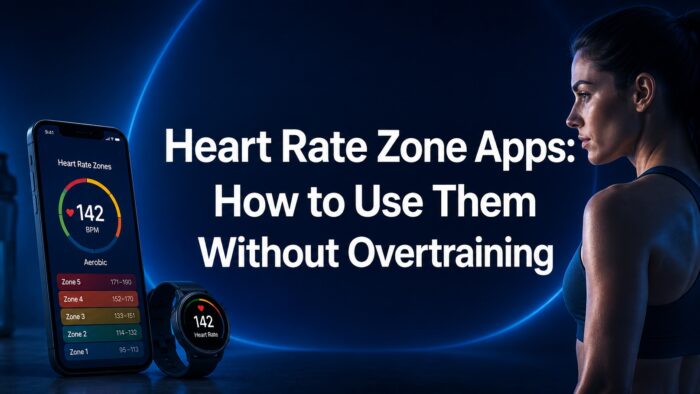
AI is strong at building balanced weekly structures, suggesting exercise alternatives when equipment is missing, and explaining unfamiliar movements in plain language. It pairs well with a wearable: you can bring context from a tracker, and our guide to using heart-rate zones without overtraining explains how to keep intensity sensible regardless of what a plan suggests. Always scale volume and load to your own ability rather than following a generated number exactly.
Good uses for meal planning
For meals, AI is helpful for generating shopping lists, rotating recipes to reduce monotony, and adapting a plan around preferences or a budget. It is less reliable for precise calorie or macronutrient targets, which depend on individual factors it cannot verify. If you want detailed tracking, a dedicated app is usually more accurate, as covered in our look at when detailed food logging helps.
Where to be cautious
Do not rely on AI for medical nutrition, managing a health condition, supplement dosing or rapid weight-change plans. Generated content can sound confident while being wrong, so review every plan for anything that seems extreme, restrictive or unsafe, and confirm health-sensitive decisions with a qualified professional.
Anchor the plan to the guidelines, not the model
A general-purpose language model has no access to your blood work, medication list, allergies, injury history or how you actually recovered from last week’s sessions. It produces text that reads like a plan. Where the plan has to interact with a medical fact, that gap is the whole problem.
The fix is to get your targets from the guidance and use the model for the scheduling around them. The CDC recommendation for adults is 150 minutes of moderate-intensity aerobic activity a week, or 75 minutes of vigorous-intensity activity, plus muscle-strengthening work on two days. The 150 minutes can be broken up, for example 30 minutes on five days. If you hand the model that structure and ask it to fit the sessions around your week, you are using it for the thing it is good at.
Diet works the same way. The Dietary Guidelines for Americans are the reference the US government maintains and updates, written for the public and for health professionals. A generated meal plan is not a substitute for them, and it has no idea what your kitchen contains or what you can afford.
There is a regulatory line worth understanding here too. The FDA distinguishes software making general wellness claims from software that functions as a medical device. A chatbot suggesting a set of squats sits on the wellness side. Software that interprets symptoms, adjusts a medication or produces a diagnosis does not, and the FDA has published how it treats artificial intelligence and machine learning in software as a medical device.
The NIMH makes a related point about mental health apps that generalises to this whole category: there is very little industry regulation, very little information on effectiveness, and no review boards or widely accepted rules for choosing between tools. Treat a generated plan as a starting draft to take to someone qualified, not as the output of a system that has been checked.
Frequently asked questions
Can ChatGPT replace a personal trainer or dietitian?
No. It can draft structure and ideas, but it cannot assess your form, medical history or individual needs the way a qualified professional can.
How do I make AI plans more accurate?
Provide detailed constraints, ask it to explain its reasoning, and refine the plan over several messages rather than accepting the first version.