Key Takeaways: Smart Kitchen Scales and Food Logging: Are They Worth Using?
- The clearest benefit appears when a person already weighs ingredients.
- A weight is precise only for the item on the platform.
- A screen may display calories and nutrients to the last digit, but food composition naturally varies.
Table of Contents
- Where a connected scale saves time
- The nutrition result depends on the food match
- Precision can become misleading
- Who may find it useful
- App quality matters more than the hardware novelty
- A calmer way to test detailed logging
- Think about cleaning and kitchen workflow
- Recipe scaling needs a final sense check
- Precision can exceed the value of the decision
- The point of the tool
- Weighing is the accurate part
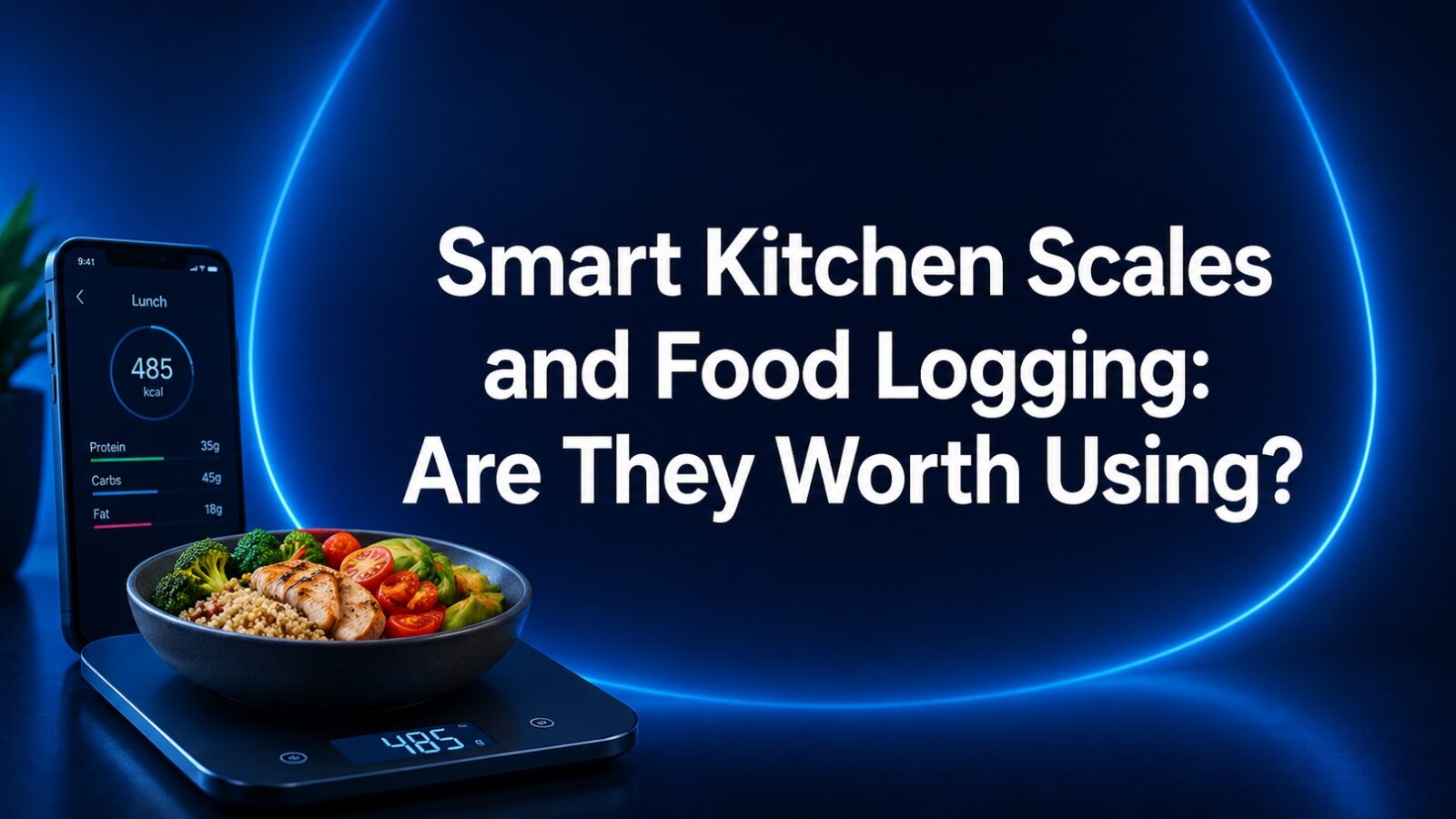
A smart kitchen scale can send ingredient weights to an app, calculate recipe totals and reduce manual food logging. That may help with baking, meal preparation or a specific nutrition plan. It can also turn cooking into a data-entry exercise and make uncertain nutrient estimates look exact.
This article is for general consumer information. People who need precise medical nutrition support or who have a history of disordered eating should use appropriate professional guidance before adopting detailed tracking.
Where a connected scale saves time
The clearest benefit appears when a person already weighs ingredients. Automatic transfer can reduce typing, remember frequent foods and calculate a multi-serving recipe. Bakers may value repeatability even when they do not care about calorie tracking.
Households that cook by sight and taste may gain little. A normal digital scale can provide the same weight without an account, subscription or database.
The nutrition result depends on the food match
A weight is precise only for the item on the platform. The app still needs the correct ingredient, brand, preparation state and edible portion. Raw and cooked foods can have different values per gram, and mixed dishes introduce more uncertainty.
Choose a service linked to a transparent nutrient source and correct mistakes rather than accepting the first search result.
- Check whether entries are verified or user submitted.
- Confirm raw versus cooked values.
- Create a recipe for mixed dishes.
- Review serving calculations after cooking.
Precision can become misleading
A screen may display calories and nutrients to the last digit, but food composition naturally varies. The database, recipe, moisture loss and portion division all introduce uncertainty. Use the numbers as estimates suited to the goal.
For everyday healthy eating, detailed weighing is not required. A balanced pattern and practical portions can be more sustainable than constant measurement.
Who may find it useful
A smart scale may suit a home baker, a person learning recipe portions, an athlete working with a qualified nutrition plan or a household that wants consistent meal preparation. The common factor is a clear use that justifies the extra setup.
It may be a poor fit when weighing increases anxiety, delays meals or encourages rigid control.
App quality matters more than the hardware novelty
Test food search, recipe editing, export and account deletion. Check whether the scale still works as a normal scale without a subscription. Buttons and a readable display are useful when the phone is wet, locked or across the kitchen.
Look at battery replacement, cleaning and the maximum weight. A food scale should be easy to wipe without damaging charging ports or controls.
- Prefer basic operation without cloud access.
- Check whether household profiles are separate.
- Avoid scales that lock normal weighing behind an account.
- Keep a backup of important recipes.
A calmer way to test detailed logging
Use the scale for one practical purpose over two weeks, such as learning breakfast portions or improving a recipe. Do not begin by weighing every bite. Review whether the process saved time or produced a useful change.
If the only result is more attention to food numbers, the smart function has not earned its place.
Think about cleaning and kitchen workflow
A scale used around raw ingredients needs a surface that can be cleaned easily without trapping food around buttons or seams. Removable platforms help, but users should follow the product’s instructions and avoid immersing electronics.
Placement matters. If the scale is stored in a cupboard behind several appliances, it will not save time. A compact model with a readable display may be more useful than a connected scale that takes longer to set up.
- Easy-to-clean surface
- Readable display
- Stable platform
- Simple storage
Recipe scaling needs a final sense check
Apps can multiply ingredients when a serving count changes, but cooking does not always scale perfectly. Seasoning, pan size, cooking time and liquid loss may need manual adjustment. A smart scale cannot solve every recipe problem.
Keep notes on successful changes instead of trusting the next automatic calculation. A personal recipe record can become more valuable than the app’s original estimate.
Precision can exceed the value of the decision
A connected scale can improve recipe consistency and portion awareness, but the nutrition result still depends on the food database and the actual ingredients. A gram-perfect entry does not make an incorrect product match accurate.
Use detailed weighing for a defined purpose and limited period. For routine cooking, household measures, repeated recipes and visual portions may provide enough information with less friction.
The point of the tool
A connected kitchen scale is worthwhile when it saves real work or supports a clear plan. If it adds anxiety, subscriptions and false precision, a normal scale may be the better tool.
Families using the same scale should confirm that each person’s recipes and logs remain separate. Nutrition records can reveal health goals and medical needs. Guest mode and profile controls are therefore more than convenience features.
Weighing food is the accurate part, the database is not
A kitchen scale is one of the few genuinely accurate instruments in consumer health technology. It measures mass directly, to within a gram or two, and that is a real measurement rather than an estimate. If you want your food logging to improve, weighing is the step that does it, and it works with a fifteen-dollar scale as well as with a connected one.
The error moves to the database. A logged entry pairs your accurate weight with somebody’s nutrient values for that food, and those values vary with variety, ripeness, cut, cooking method and how the entry was created in the first place. Crowd-sourced entries in the big apps are frequently wrong. Where a packaged product has a label, the label is the better source, and the FDA’s nutrition labelling material explains what the figures on it mean and how they are derived.
For targets rather than measurement, the reference is the Dietary Guidelines for Americans, not the app’s default. And the same behavioural caveat applies as to any detailed logging: it suits some people and makes others worse, particularly anyone with a history of disordered eating. A scale that turns cooking into a compliance exercise you dread is not helping, however accurate it is.