Key Takeaways: Food Allergy Scanner Apps: Helpful Label Check or Risky Shortcut?
- Most scanner apps match a barcode to a stored ingredient list and the user’s selected allergens.
- An allergen may enter food through shared equipment, preparation surfaces or a supplier even when it is not a deliberate ingredient.
- A good app may help create a household list, remember previous checks, flag synonyms and organize questions for a dietitian or allergy clinic.
Table of Contents
- The app reads data, not the physical food
- Cross-contact is difficult to automate
- Use the scanner as a second check
- Personalization can still add value
- Privacy and advertising deserve attention
- Meal-planning tools may create another layer of risk
- Restaurants and unpackaged food remain difficult
- Database quality should be inspectable
- Create a household verification routine
- An emergency plan does not live inside the scanner
- A shortcut should never weaken the safety routine
- Why even accurate labels leave gaps
- An allergic emergency is not something an app can manage
- When the app and the label disagree
- Sources and further reading
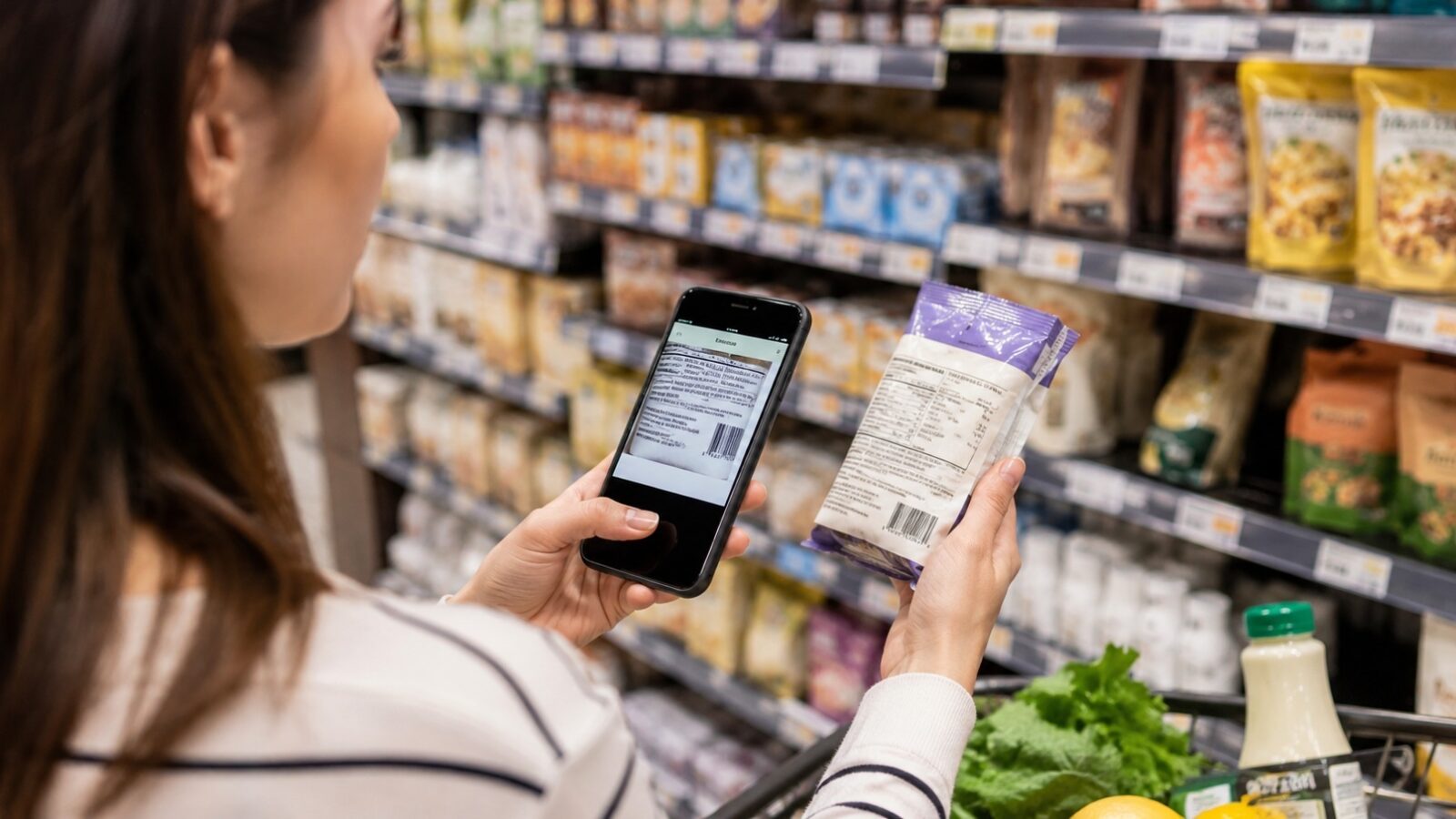
Pointing a phone at a barcode and receiving a red or green answer feels easier than reading a crowded ingredient label. For someone managing a food allergy, that convenience can support shopping. It can also become dangerous if the app’s database is old, the product has changed or the risk comes from cross-contact rather than a listed ingredient.
This article is general information about consumer health technology, not informational context. It cannot identify patterns in a condition or replace a qualified professional. Speak with a clinician about your own health.
The app reads data, not the physical food
Most scanner apps match a barcode to a stored ingredient list and the user’s selected allergens. They do not chemically test the product. If the database is incomplete, the barcode is reused or the manufacturer changes the recipe, the result may be wrong.
Imported products, restaurant meals, bakery items and small local brands are especially difficult because information may be missing or vary by market.
Cross-contact is difficult to automate
An allergen may enter food through shared equipment, preparation surfaces or a supplier even when it is not a deliberate ingredient. Precautionary statements are not identical across countries, and an app may simplify language that needs careful interpretation.
People with a diagnosed allergy should follow their clinician’s emergency plan and local label guidance rather than treating an app as the final decision-maker.
Use the scanner as a second check
- Read the current package label every time.
- Confirm that the app entry matches the same country and package size.
- Check the date of the database record if available.
- Contact the manufacturer when wording is unclear.
- Do not use a green result to override a warning on the label.
Personalization can still add value
A good app may help create a household list, remember previous checks, flag synonyms and organize questions for a dietitian or allergy clinic. It can also make shopping easier for relatives who are learning the same restrictions.
The goal is not to outsource judgement. It is to reduce avoidable reading errors while keeping the actual label and emergency plan central.
Privacy and advertising deserve attention
Allergy information can reveal health conditions, family details and shopping behavior. Check whether the app shares scan history, location or health profiles for advertising. A product does not need permanent location or contact access to read a barcode.
Meal-planning tools may create another layer of risk
If the scanner connects to recipes or shopping lists, verify every substituted product. A meal-planning app can save time, but automatic swaps may not respect a serious allergy. The broader guide to meal-planning apps explains how automation can introduce assumptions.
Connected kitchen tools also have database limits. Smart kitchen scales and food logging should not be used to infer that a food is safe.
Restaurants and unpackaged food remain difficult
A menu database cannot see the kitchen, supplier substitution or shared fryer. Restaurant allergy information may help start a conversation, but staff still need to confirm ingredients and preparation. When communication is uncertain, the safest choice may be a simpler meal or another venue.
Database quality should be inspectable
Look for the country, source and update date attached to a product entry. Community-edited records can be useful but should be marked clearly. A photo of a label is more trustworthy when it matches the exact package in hand.
Create a household verification routine
- One person scans while another reads the label for new products.
- Save a manufacturer contact when clarification was needed.
- Recheck familiar products after packaging changes.
- Keep emergency medicine accessible during shopping and travel.
- Teach children and caregivers that the app can be wrong.
An emergency plan does not live inside the scanner
The user should know the symptoms and response plan provided by their clinician. Phone battery, network access and a database are not reliable enough to be the only safety system during a reaction.
A shortcut should never weaken the safety routine
Use an allergy scanner to organize and double-check information, not to replace the package label, manufacturer guidance or an individual emergency plan. When the consequence of an error is serious, uncertainty should lead to a safer alternative rather than a confident app screen.
Why even accurate labels leave gaps
A scanner app is only ever as good as the label and database behind it, and labeling itself has limits worth understanding. In the US, manufacturers must declare the major food allergens (a list expanded to include sesame as the ninth in 2023), but precautionary statements such as may contain are largely voluntary and inconsistent, so their absence does not guarantee safety. Recipes also change without an app’s database necessarily keeping up. For someone managing a serious allergy, that means a scan is a helpful first filter, never the final word, and the physical label, plus direct manufacturer information when in doubt, remains the authority.
An allergic emergency is not something an app can manage
This is the part no scanner can help with, and it is the most important. A serious allergic reaction can escalate within minutes, and the response is an action plan agreed with a clinician, typically including prescribed emergency medication kept close at hand, not a phone. Reputable allergy organizations stress having and knowing how to use that plan. manage the app as a convenience that supports your safety routine, and make sure the routine, reading labels, asking questions, carrying what your doctor prescribed, never weakens because a screen showed a reassuring green tick.
When the app and the label disagree
manage any conflict between a scanner app and the physical packaging as settled in the label’s favour, every time. The product in your hand is the current reality; the app’s database may be outdated, regional or simply wrong. If a scan flags a product as safe but the ingredient list or a precautionary statement suggests otherwise, do not eat it on the app’s say-so. Where it helps everyone is by reporting database errors back to the app so the next person gets a more accurate result, but your own safety decision should always rest on the label, the manufacturer when in doubt, and the plan you have agreed with your clinician.