Key Takeaways: Can Your Watch Really Measure Blood Pressure? What the 2026 Evidence Says
- A traditional cuff measures pressure directly by inflating against your artery.
- The optical approach is exquisitely sensitive to things that have nothing to do with your cardiovascular health.
- The expert consensus hardened through late 2025 and into 2026.
Table of Contents
- How a cuffless device guesses your blood pressure
- Why accuracy is genuinely hard
- What regulators and doctors actually say
- The ‘FDA cleared’ trap
- If you already own one, here is how to use it sensibly
- Where this is heading
- Why people want it badly enough to overlook the flaws
- Not all cuffless devices are the same
- What a trustworthy reading still looks like
- Sources and further reading
A blood pressure reading from a watch, with no cuff, no squeeze and no fuss, is the feature wearable makers have been promising for years. In 2026 it has arrived in more products than ever, and a new wave of standalone wrist bands measure pressure dozens of times a day automatically. The pitch is seductive: continuous insight into one of the most important numbers in medicine. The problem is that the medical establishment is, almost unanimously, telling people not to rely on it yet.
This is not a small caveat buried in a manual. It is the considered position of cardiologists, hypertension societies and, increasingly, regulators. Understanding the gap between the marketing and the science matters, because blood pressure is not a casual metric. Misreading it can mean missing real hypertension or, just as harmful, chasing a phantom problem that the device invented.
This article is general information, not informational context. If you are concerned about your blood pressure, speak with a clinician and use a validated upper-arm cuff.
How a cuffless device guesses your blood pressure
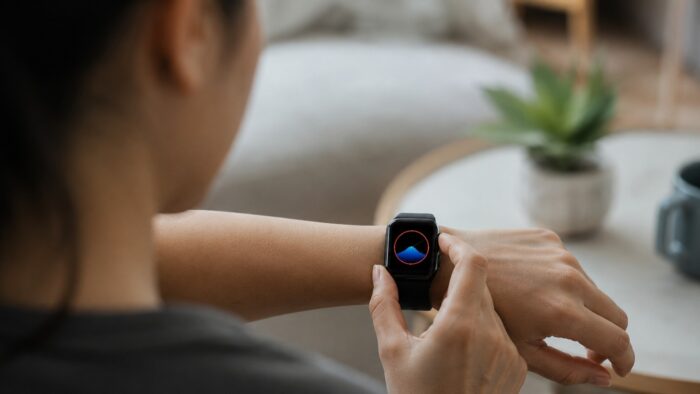
A traditional cuff measures pressure directly by inflating against your artery. A watch cannot do that, so it estimates instead. Most cuffless devices shine light into the skin and read how blood volume changes with each heartbeat, a technique called photoplethysmography, the same green light behind your wrist that reads heart rate. A proprietary algorithm then translates that optical signal into a pressure estimate, usually after an initial calibration against a real cuff.
The word doing the heavy lifting there is estimate. The device is not measuring pressure; it is inferring it from a related signal using assumptions that hold better for some people, in some conditions, than others. That is the root of nearly every accuracy concern that follows.
Why accuracy is genuinely hard
The optical approach is exquisitely sensitive to things that have nothing to do with your cardiovascular health. Motion blurs the signal. Ambient light interferes. Skin tone, wrist size and the stiffness of your arteries all shift the relationship between the light pattern and the underlying pressure. And because most devices calibrate against a cuff at setup, that calibration drifts over the following days and weeks, so a reading that started accurate can quietly wander off.
Independent testing has repeatedly found the same pattern: cuffless estimates tend to drift toward the calibration point, overestimating low pressures and underestimating high ones. In other words, the device flatters the middle and softens the extremes, which is the opposite of what you want from a tool meant to catch dangerous readings. The accuracy questions echo those we raise about other consumer sensors in blood pressure apps and what they cannot do.
What regulators and doctors actually say
The expert consensus hardened through late 2025 and into 2026. In December 2025 the American Heart Association issued a scientific statement noting that many wearable blood pressure devices have never been validated against rigorous independent protocols, and that variables such as arm position, skin color and calibration timing can all distort results. The accompanying 2025 hypertension guideline recommended against using cuffless devices to identify patterns in or manage high blood pressure until they prove more reliable.
Regulators moved in parallel. In January 2026 the US Food and Drug Administration issued draft guidance spelling out the clinical evidence it expects from cuffless devices that make genuine blood pressure claims, a direct response to products that had skirted the line. The agency had already warned at least one major fitness brand in 2025 that estimating blood pressure is a medical-device function, not a wellness feature. An international panel writing in JAMA Cardiology put it bluntly: a cuffless device should match the accuracy of a clinical cuff, or it should not be used at all.
The ‘FDA cleared’ trap
Here is the part that confuses most buyers. A device can carry an FDA clearance and still be inaccurate, because clearance is not the same as proof of accuracy. The AHA has pointed out that a large majority of blood pressure devices sold worldwide have never undergone formal validation testing, and that regulatory clearance does not guarantee a device measures correctly. We unpack this distinction in detail in what “FDA cleared” really means on a health wearable, because it underlies a lot of misleading marketing across the whole category, a theme also running through the digital health trends consumers should watch.
If you already own one, here is how to use it sensibly
- manage the number as a rough wellness signal, not a diagnosis.
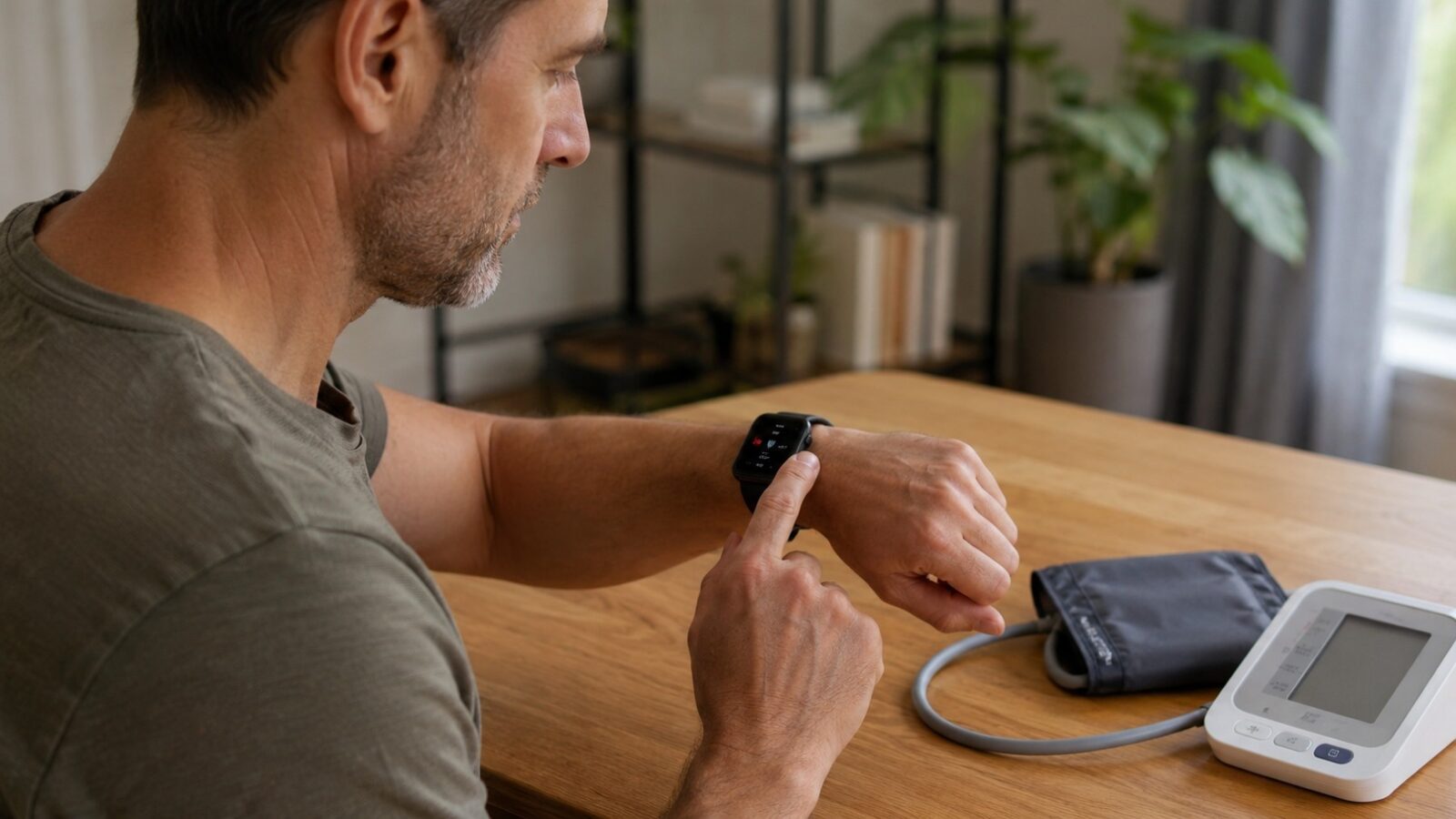
- Recalibrate against a validated upper-arm cuff as often as the manufacturer advises, and expect drift between calibrations.
- Never adjust, start or stop blood pressure medication based on a watch reading.
- If the watch repeatedly flags high readings, confirm with a proper cuff and see a clinician rather than dismissing or panicking.
- Keep the device still and your arm supported when it measures, since movement degrades the estimate.
People managing an existing heart condition sometimes find the continuous trend useful as context for a conversation with their doctor, in the same supporting role described in using wearables to support chronic condition management. That is a reasonable use. Self-diagnosis is not.
Where this is heading
None of this means cuffless blood pressure is vapour. The technology is improving, the first over-the-counter cuffless wrist devices are reaching the market, and continuous, unobtrusive monitoring could one day genuinely change how hypertension is caught and managed, especially since the cuff itself can make some people anxious enough to raise their own reading. The honest position is simply that the evidence has not caught up with the marketing. Until standardised validation exists and devices clear it, the cuff on your upper arm remains the number to trust, and the watch remains an interesting estimate. That same gap between a clinical-grade signal and a consumer estimate runs through every alert-based feature, including the ones we examine in wearable ECG alerts and when to follow up.
Why people want it badly enough to overlook the flaws
It helps to understand why cuffless monitoring is so appealing, because the demand is real and reasonable. Blood pressure varies constantly through the day, and a single reading in a clinic can miss both masked hypertension and the well-known white-coat effect, where the act of being measured pushes a reading up. A device that samples quietly throughout ordinary life, without the squeeze of a cuff that can itself raise the number in anxious people, could in principle paint a truer picture than occasional snapshots. That promise is genuine, and it is exactly why so many buyers are willing to give the technology the benefit of the doubt it has not yet earned.
Not all cuffless devices are the same
The category is also broader than watches. Alongside smartwatch features, dedicated cuffless wrist bands have begun reaching the market, including over-the-counter devices designed to take dozens of automatic readings a day at a price point around that of a mid-range fitness tracker. These purpose-built bands may eventually prove more reliable than a general watch borrowing its heart rate sensor for the job, but they face the same fundamental validation question: have they been tested against a recognized accuracy standard in the kind of person, and the kind of conditions, you actually live in? Until that evidence is public and independent, a sleeker form factor does not change the underlying caution.
What a trustworthy reading still looks like
Because the science is unsettled, it is worth remembering what good blood pressure measurement actually requires, since no wearable yet matches it. A reliable reading comes from a validated upper-arm cuff, taken while you sit still with your back supported and your arm at heart level, after a few minutes of rest, ideally as an average of more than one reading. Those conditions are unglamorous, but they are the reason the cuff remains the reference. A watch that measures while you walk, type or sleep is working against every one of them, which is part of why its estimates wander.