Key Takeaways: Macro Tracking Apps: When Detailed Food Logging Helps and When It Does Not
- A target should connect to a real goal: supporting recovery, understanding meal balance or following a clinician-guided plan.
- User-entered foods can have incorrect serving sizes or missing nutrients.
- Timing, distribution, appetite and food quality can matter to the practical plan.
Table of Contents
- Define the question before choosing a target
- Food databases contain uncertainty
- Protein is more than a daily total
- Detailed logging can become counterproductive
- Choose the minimum useful level of detail
- Review whether the data changed anything
- Targets should change with the situation
- Micronutrients and meal quality can disappear behind macros
- Medical conditions need individual guidance
- Less detailed alternatives may be enough
- A good nutrition tool should make eating more workable
- When tracking helps, and when it is better to stop
- Who should be cautious, and where to get support
- One simple test: easier or harder?
- Sources and further reading
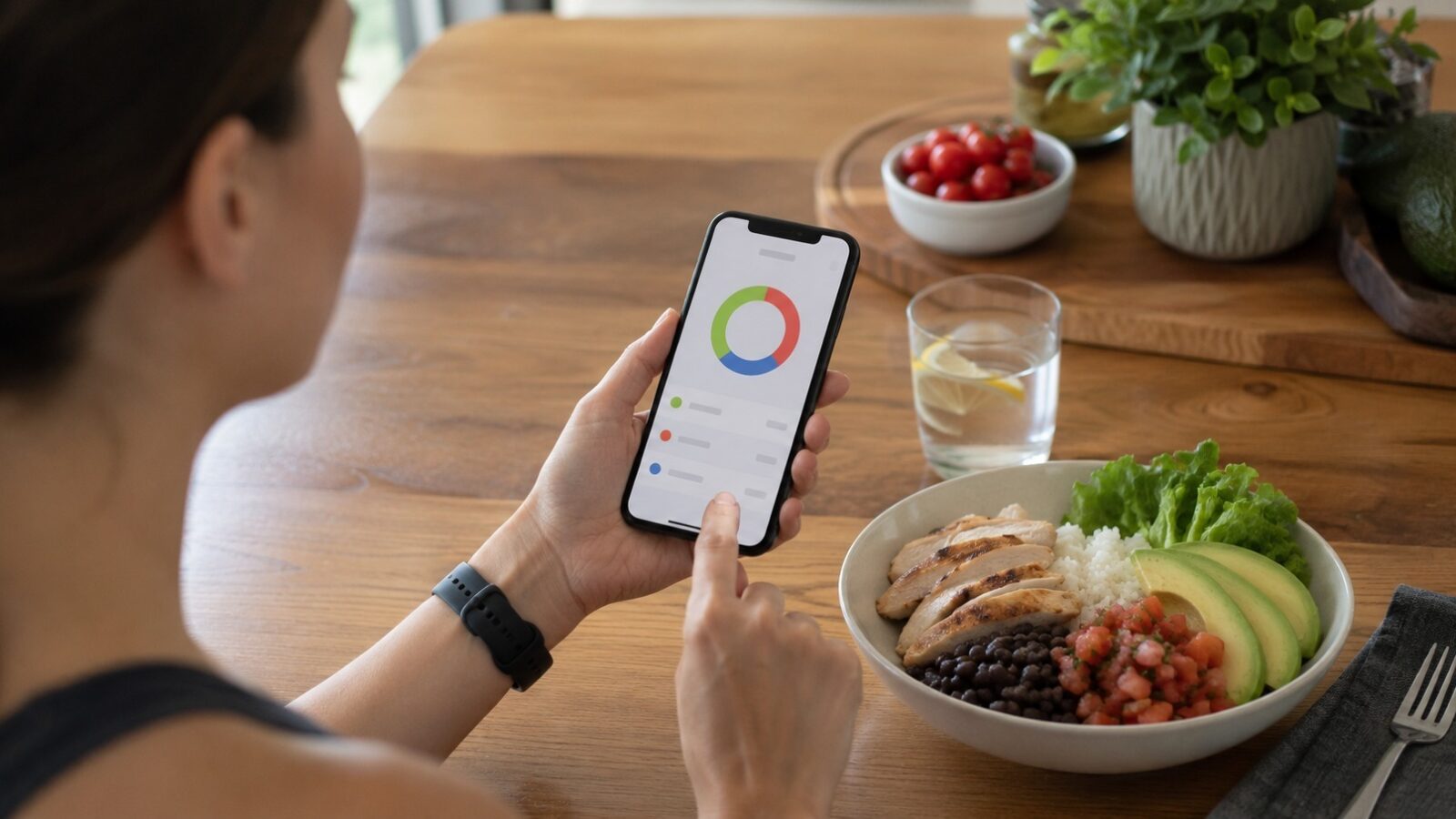
Macro tracking turns food into grams of protein, carbohydrate and fat. For an athlete learning whether meals support training, a person checking protein distribution or someone working with a qualified professional, the detail may be useful for a limited period. For many others, it creates a demanding record without improving the decision.
This article is general information about consumer health technology, not informational context. It cannot identify patterns in a condition or replace a qualified professional. Speak with a clinician about your own health.
Define the question before choosing a target
A target should connect to a real goal: supporting recovery, understanding meal balance or following a clinician-guided plan. Copying a ratio from a social post ignores body size, training, culture, appetite, medical needs and the rest of the diet.
If the app cannot explain where a target came from, manage it as a generic estimate rather than a personal requirement.
Food databases contain uncertainty
User-entered foods can have incorrect serving sizes or missing nutrients. Restaurant dishes and home recipes vary. A photograph may identify the wrong food, and a barcode may link to an old formulation. Precision in the display does not remove uncertainty in the input.
- Check branded entries against the current label.
- Create and reuse accurate home recipes.
- Use the same portion method during a short comparison period.
- Do not adjust management from an app calculation without appropriate advice.
Protein is more than a daily total
Timing, distribution, appetite and food quality can matter to the practical plan. A person who reaches a number only through products they dislike is unlikely to maintain it. The app should support meals, not replace them with a spreadsheet.
Detailed logging can become counterproductive
Warning signs include skipping social meals, anxiety after an imperfect entry, repeated checking, guilt, compensatory exercise or narrowing the diet to foods that are easy to log. People with a history of disordered eating may need to avoid detailed tracking or use it only with suitable professional support.
The guide to meal planning without restriction offers less intensive ways to organize food.
Choose the minimum useful level of detail
Some goals need only a simple meal pattern or a few repeated checks. A kitchen scale may be useful for a new recipe, while visual portions are enough for routine meals. Logging every ingredient forever is rarely the only option.
Review whether the data changed anything
After two to four weeks, ask what the record taught you. Did it improve meal planning, reveal a consistent gap or support a productive conversation? If not, stop collecting. The time and attention cost are part of the decision.
Targets should change with the situation
Training volume, injury, illness, age and energy needs can change. A target created months earlier may not remain useful. Review the reason for tracking instead of automatically increasing or decreasing food to satisfy the app.
Micronutrients and meal quality can disappear behind macros
Two days can show similar protein, carbohydrate and fat totals while differing greatly in fiber, variety, sodium and overall food quality. Macro totals are one lens, not a complete nutrition assessment.
Medical conditions need individual guidance
Kidney disease, diabetes, gastrointestinal conditions, pregnancy, allergies and some medicines can change what is appropriate. A general calculator should not override advice from a qualified professional who understands the condition.
Less detailed alternatives may be enough
- Use a repeatable breakfast or recovery meal.
- Add a protein source to main meals without counting every gram.
- Plan snacks around training time.
- Track only the nutrient connected to the current question.
- Use a short food diary without calorie totals.
A good nutrition tool should make eating more workable
Macro apps are most useful when the question is specific, the database is checked and the tracking period has an end. They should not turn normal variation into failure or present a generic target as medical truth.
When tracking helps, and when it is better to stop
Detailed food logging suits some goals and some people, and not others. For a defined, short-term purpose, understanding portions, working with a dietitian, learning what is in everyday meals, it can build genuinely useful awareness. But the same precision can tip into preoccupation. If logging starts to drive anxiety, guilt around eating, rigid rules, or a sense that a number must be obeyed regardless of hunger, that is a signal the tool is doing harm rather than good. A healthy relationship with food does not require accounting for every bite, and stepping back from tracking is a perfectly valid, often healthier, choice.
Who should be cautious, and where to get support
Detailed calorie or macro tracking is not appropriate for everyone. For anyone with a history of disordered eating, or who is at risk of it, obsessive logging can reinforce harmful patterns, and a clinician or registered dietitian is the right person to advise whether to track at all. If you or someone you know is struggling with food, eating or body image, support is available; in the US, the National Alliance for Eating Disorders (and, outside the US, a local eating disorder support service or a qualified health professional) offers a clinician-staffed helpline. The most reliable nutrition tool is one that makes eating more workable and less stressful, not one that turns every meal into data entry.
One simple test: easier or harder?
If you are unsure whether tracking is serving you, apply a single question every week or two: is logging making eating feel more workable, or more stressful? A tool that is helping tends to fade into the background, giving you useful awareness without dominating meals. A tool that is hurting tends to do the opposite, creeping into every decision, attaching guilt to food, and making a missed entry feel like a failure. If the honest answer trends toward harder, that is reason enough to log less, log differently, or stop, regardless of any goal the app is nudging you toward. The right level of detail is the lowest one that still answers your actual question.