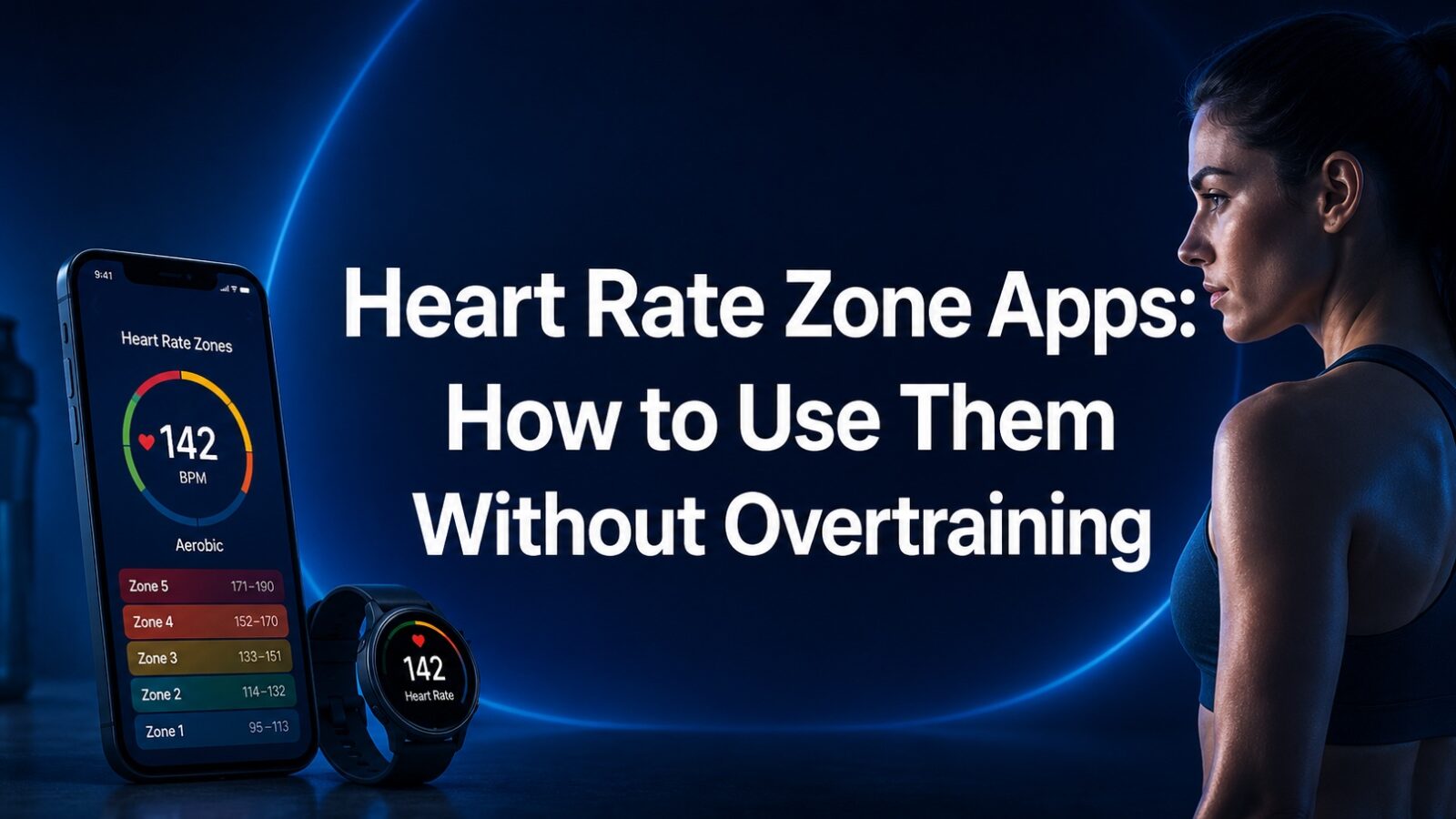
Key Takeaways: Heart Rate Zone Apps: How to Use Them Without Overtraining
- Many apps begin with an estimated maximum heart rate.
- Wrist sensors are convenient and often adequate for steady movement.
- The talk test and perceived exertion provide context that an app cannot.
Table of Contents
- Know how the app created the zones
- Sensor choice affects the usefulness of the chart
- Effort still matters
- Signs that the plan is asking too much
- A practical way to use zones
- Privacy and sharing
- How to plan recovery around the numbers
- Heat, hills and dehydration change the picture
- Related articles
- Zones change when the body or medication changes
- Where the useful boundary sits
- Set the zones from the guidelines
Heart rate zones can turn a workout into an organized plan, but the colorful bands can also create false precision. An app may calculate zones from age, a test or recent activity, while the body is affected by heat, stress, caffeine, medication, illness and training history. The number is useful only when it agrees reasonably well with effort and recovery.
This article is educational and does not provide an individual exercise prescription. People with symptoms, known cardiovascular conditions, pregnancy or medical restrictions should seek appropriate professional guidance before changing training intensity.
Know how the app created the zones
Many apps begin with an estimated maximum heart rate. Others use a recorded peak, resting heart rate or threshold test. The method changes the boundaries, so two apps can label the same workout differently.
Read the settings and avoid assuming the default is personalized. A hard effort recorded during poor sensor contact may also distort automatic calculations.
Sensor choice affects the usefulness of the chart
Wrist sensors are convenient and often adequate for steady movement. They can lag during intervals, struggle with gripping exercises or produce errors when the watch moves. A chest strap may respond faster for structured training, but it also requires fit, maintenance and battery care.
Use the same sensor for comparisons and inspect sudden jumps that do not match the workout. A graph is not evidence of effort when the signal is poor.
- Wear the device snugly according to the instructions.
- Warm up before judging the first minutes.
- Check unusual spikes against how you felt.
- Clean sensors and straps regularly.
Effort still matters
The talk test and perceived exertion provide context that an app cannot. Easy training should feel sustainable. A session labeled moderate that feels extremely hard may reflect fatigue, heat, illness or an inaccurate zone.
Medication can alter heart rate response. Beta blockers are a familiar example, but other medicines and health conditions can also change the relationship between pulse and effort. Generic zones may not be suitable.
Signs that the plan is asking too much
Training problems often appear outside the workout: persistent fatigue, declining performance, irritability, poor sleep, unusual soreness or a resting heart rate that stays different from the person’s normal pattern. One difficult day is not a diagnosis, but a cluster deserves a lighter schedule and, when appropriate, professional review.
Do not use a streak or weekly score as a reason to train through fever, chest pain, fainting, severe breathlessness or another concerning symptom.
- Increase workload gradually.
- Keep genuine easy days easy.
- Include recovery, sleep and food in the plan.
- Stop and seek care for serious symptoms.
A practical way to use zones
Choose one or two sessions each week where zones matter, such as a steady endurance session or controlled intervals. Let other activity be guided by time, distance or comfort. This reduces the tendency to turn every walk into a test.
Review the month rather than chasing one perfect chart. Consistency and recovery are more valuable than spending an exact percentage of time in a colored band.
Privacy and sharing
Workout data can reveal home location, routes, schedule and health information. Hide start and end points, review social defaults and limit connections between fitness, advertising and insurance services unless there is a clear reason.
Export only the information a coach or clinician needs. Public leaderboards do not need access to every health metric.
How to plan recovery around the numbers
Use a simple rhythm of hard, easy and rest days rather than letting each workout score decide the next session. Training load tools can support that plan, but they cannot fully account for work stress, illness, travel or poor sleep.
Keep a short note after key sessions: effort, mood, soreness and whether the target pace felt normal. Those observations make the heart-rate graph easier to interpret and can reveal when the body is not responding as expected.
- Plan easy days in advance.
- Reduce intensity after illness or poor recovery.
- Do not compensate for a missed session with an extreme workout.
- Review trends monthly, not emotionally after every session.
Heat, hills and dehydration change the picture
Heart rate can rise at the same pace when the weather is hot, the route is hilly or hydration is poor. An app may interpret that as a harder training load even though fitness has not changed. Compare similar sessions when trying to judge progress.
Indoor and outdoor readings can also differ because the environment and movement pattern change. Context belongs beside the number.
- Note temperature and terrain.
- Compare like with like.
- Use pace and effort alongside heart rate.
- Do not force a usual pace in unusual conditions.
Related articles
- Fitness Trackers in 2026: How to Choose One That Fits Your Routine
- Using Wearables to Support Chronic Condition Management
Zones change when the body or medication changes
Age-based formulas are only estimates. Fitness level, heat, dehydration, illness, altitude and medicines that affect heart rate can change the relationship between pulse and effort. Perceived exertion and the ability to speak remain useful checks.
A sudden change in heart-rate response, chest discomfort, faintness or unusual breathlessness should not be explained away by an app. Stop the session and seek appropriate assessment.
Where the useful boundary sits
Heart rate zones are useful when they guide a sensible plan and agree with how the body responds. They become risky when a colored band overrules symptoms, recovery or informational context.
Set the zones from the guidelines, not from the app
Heart rate zone apps mostly inherit two assumptions that are worth replacing with something better. The first is a maximum heart rate estimated from your age by a formula, which carries a standard deviation of roughly ten to twelve beats per minute across individuals. The second is that the wrist reading feeding the zone is accurate, which is least true exactly when it matters. A 2025 PLOS ONE validation study found wrist error grew with exercise intensity, reaching 16.5 beats per minute at high intensity for dark skin tones against 3.5 bpm for lighter ones.
Combining an estimated ceiling with a degraded input is how people end up training to a zone that does not correspond to their effort. If you want to use zones seriously, use a chest strap for the input and set your zones from a field test rather than from your birthday. If you do not want to do that, use perceived effort and the talk test, which are free and more robust than either.
The overtraining question is better answered by volume and consistency than by zone colour. The CDC recommendation for adults is 150 minutes of moderate-intensity aerobic activity a week or 75 minutes of vigorous, plus muscle-strengthening on two days, and the American Heart Association’s fitness material covers building up to that sensibly. Most people who hurt themselves with zone training do it by adding intensity and volume at the same time, not by spending a session in the wrong colour band.