Key Takeaways: Smart Alarm Clocks and Sunrise Lamps: What They Can and Cannot Do
- A sunrise lamp gradually increases light before the chosen alarm time.
- No alarm can create sleep that did not happen.
- Brightness range, gradual timing, sound quality, physical buttons and backup power affect everyday use.
Table of Contents
- How a sunrise alarm changes the wake-up environment
- The alarm still needs a realistic sleep schedule
- Features worth comparing in a shop or review
- Claims that deserve caution
- A one-week setup experiment
- Where the data goes
- Who may notice the biggest difference
- Sound choices should remain optional
- Continue with
- Test the alarm under real conditions
- What to keep in mind
- Light timing is the active ingredient
Waking up is not a single problem. Some people struggle because the room is dark, others because bedtime drifts later, sleep is interrupted or an alarm is repeatedly snoozed. Smart alarm clocks and sunrise lamps can make mornings gentler, but they cannot compensate for chronic sleep loss or identify patterns in a sleep disorder.
This article covers consumer sleep products for general information. Persistent insomnia, loud snoring, breathing pauses, severe daytime sleepiness or unsafe drowsiness should be discussed with a healthcare professional.
How a sunrise alarm changes the wake-up environment
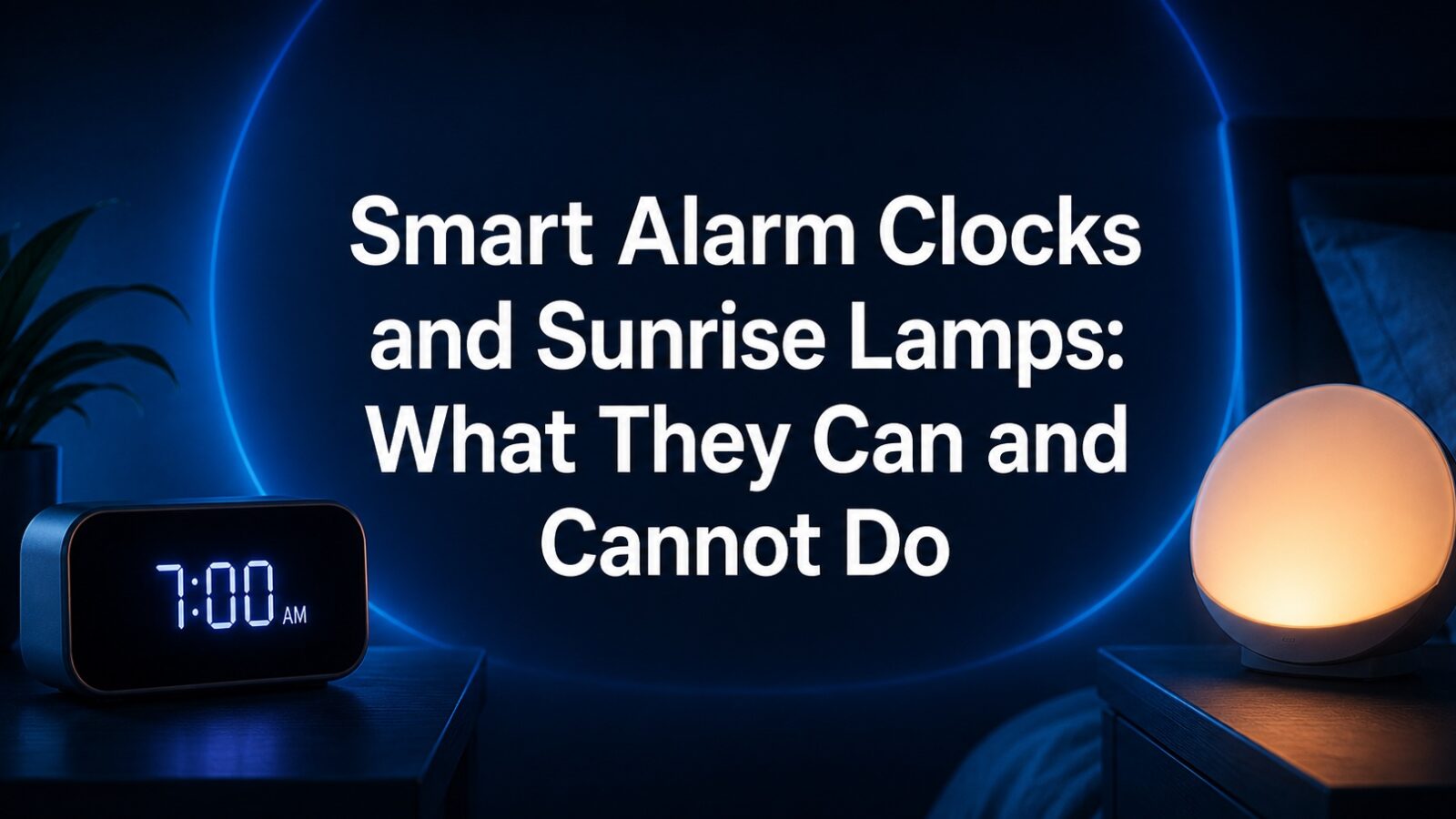
A sunrise lamp gradually increases light before the chosen alarm time. The aim is to make the transition from darkness less abrupt and provide a consistent morning cue. Some people find this more comfortable in winter, in dark bedrooms or during early starts.
The effect depends on placement, brightness, timing and whether the sleeper’s eyes are exposed to the light. A lamp across the room or behind a large object may have little influence.
The alarm still needs a realistic sleep schedule
No alarm can create sleep that did not happen. If bedtime is regularly delayed by work, scrolling or an inconsistent routine, a softer wake-up may feel pleasant while daytime fatigue continues. Start by protecting enough time for sleep and keeping wake time reasonably steady.
A smart clock can support that routine with a dim evening display, scheduled wind-down cues and fewer phone notifications. Those simple features may matter more than elaborate sound libraries.
- Set the wake time before choosing the light curve.
- Place the lamp where light can reach the face without glare.
- Keep the bedroom dark during the main sleep period.
- Avoid using the clock as another screen for news or messages.
Features worth comparing in a shop or review
Brightness range, gradual timing, sound quality, physical buttons and backup power affect everyday use. People who wake at different times may need separate schedules. Travelers should check whether settings survive a power loss and whether the clock works without cloud access.
Accessibility deserves attention. Large controls, spoken setup, tactile buttons and a clear display can be more important than app-based customisation.
Claims that deserve caution
Smart alarms often claim to wake a person in a light sleep stage. Consumer devices estimate sleep from movement, sound or connected wearable data, so the timing is not exact. A flexible alarm window may feel better for some users, but it should not be presented as precise sleep-stage control.
Do not rely on a lamp to manage seasonal mood changes or another health condition without suitable advice. Product descriptions may use therapeutic language even when the device is sold as a general consumer light.
- A sleep score does not prove the best wake time.
- More brightness is not automatically better.
- Phone dependence can undermine the purpose of a separate clock.
- A subscription should not be necessary for basic alarm functions.
A one-week setup experiment
Use the same wake time for seven days. Begin with a moderate light increase and a quiet backup sound. Note ease of waking, afternoon sleepiness and whether bedtime shifts earlier. Change one setting at a time rather than testing every color and sound.
If the morning improves but daytime sleepiness remains, look at total sleep, interruptions, medication effects and possible sleep problems rather than continuing to adjust the lamp.
Where the data goes
A basic lamp may store nothing. A connected clock can collect schedules, microphone data, room conditions and app activity. Disable voice assistants or sleep recording when they are not needed, and check whether the device remains functional if the account is deleted.
A bedroom product should reduce attention, not create another stream of notifications and analytics.
Who may notice the biggest difference
People who wake before daylight, keep a consistent schedule or dislike sudden alarms may find a sunrise lamp useful. Shift workers and people with irregular schedules may need more careful timing because morning light can interact with the body’s internal clock in different ways.
A product should allow separate weekday and weekend schedules without making setup complicated. If several people share the room, check whether the light or sound disturbs the other sleeper.
- Early workers
- Winter sleepers
- People moving away from phone alarms
- Households that need multiple schedules
Sound choices should remain optional
Nature sounds and white noise can mask household noise for some sleepers, but volume should stay comfortable and the device should not create dependence on a cloud service. Timers, local playback and physical volume controls make the feature more practical.
If sound causes headaches, irritation or masks an important alarm, turn it off. The product should adapt to the sleeper, not the other way around.
Continue with
- How Accurate Is Sleep Tracking on Watches and Rings?
- Blue Light, Evening Screens and Sleep: What Matters Most
Test the alarm under real conditions
A sunrise effect may feel pleasant in a dark room but offer little benefit if street light already fills the bedroom. Likewise, a loud alarm may be ineffective for a person who turns it off without waking. Test brightness, sound, vibration and backup power before relying on the device for work, school or medication timing.
People with eye conditions, light sensitivity, bipolar disorder or sleep disorders should seek suitable advice before using bright-light features as therapy.
What to keep in mind
A sunrise lamp can make waking gentler, but it works best inside a realistic sleep schedule. Choose simple controls, test placement and ignore claims that turn an alarm clock into a medical solution.
Light timing is the active ingredient
The plausible mechanism behind a sunrise lamp is circadian: light in the morning helps anchor the body clock, and light in the evening delays it. That is why the timing and intensity of the light matter more than the device wrapped around it, and why a cheap lamp on a timer can do most of what an expensive one does.
It is also worth knowing what the evidence does not support, because the adjacent product category has been tested. Cochrane’s 2023 systematic review of blue-light filtering spectacle lenses pooled 17 randomised controlled trials and concluded the lenses probably make no difference to eye strain, that any effect on sleep quality is currently unclear, and that no conclusions could be drawn about long-term retinal health. Filtering a slice of the spectrum through a lens is not the same intervention as changing how much light reaches your eyes and when.
For the sleep problem itself, the hierarchy is clear and puts the hardware last. The CDC’s sleep material and the NHLBI’s guidance on sleep deprivation cover the basics that do the heavy lifting: consistent timing, a dark and cool room, and limiting what you do in bed. For chronic insomnia specifically, the American College of Physicians guideline recommends that all adults receive cognitive behavioural therapy for insomnia as the initial treatment. A sunrise lamp is a reasonable comfort purchase and a poor substitute for any of that.