Key Takeaways: Garmin Body Battery Accuracy Explained: Should You Rest or Train?
- Body Battery is a relative energy estimate built mainly from heart-rate variability, stress and activity, not a precise measurement.
- It is most useful as a personal trend over days and weeks rather than as a single morning number.
- Pair it with how you actually feel; the score informs a decision, it should not override your judgement.
Garmin’s Body Battery has become one of the more talked-about wearable metrics because it tries to answer a practical question: do you have energy to push today, or is recovery the smarter call? Understanding how the number is built makes it far more useful and stops it from becoming another figure you check and then ignore.
How Body Battery is estimated
Body Battery is derived largely from heart-rate variability (HRV), stress estimates, sleep and activity. When HRV suggests your body is recovering well, the score charges; when stress and activity dominate, it drains. Because it leans on HRV, it is a relative, personalized estimate rather than a direct measurement of anything in your body. Our explainer on how to read readiness data covers the same principles across brands.
How accurate is it, really?
Accuracy is best judged against yourself, not against an absolute standard. The underlying HRV signal can be affected by alcohol, late meals, illness, travel and inconsistent wrist contact. That means an unusually low morning score sometimes reflects measurement noise rather than genuine fatigue. Treated as a trend over several days, Body Battery tends to track how recovered people feel reasonably well; treated as a precise daily verdict, it can mislead.
Should you rest or train?
A useful rule is to weight the score about equally with subjective signals: sleep quality, motivation, muscle soreness and mood. If Body Battery is low and you also feel flat, that is a reasonable cue to choose an easier session. If the score is low but you feel good and slept well, a normal session is usually fine. Avoid skipping training purely because a number is low, and avoid pushing through genuine fatigue purely because a number is high.
Getting more reliable readings
Wear the device consistently, including overnight, keep the band snug but comfortable, and give it a couple of weeks to establish your baseline. The more consistent your wear, the more meaningful the trend becomes.
How good is the sensor underneath the score
Body Battery is derived from heart rate variability read by the optical sensor on the underside of the watch. The accuracy of that input sets a ceiling on the accuracy of the output, so it is worth knowing where the sensor is strong and where it is not.
A 2025 validation study in PLOS ONE compared a wrist monitor against a chest strap across exercise intensities and skin tones. At rest the groups did not differ meaningfully, with a mean error of about 2.8 beats per minute. During exercise the picture changed: error stayed near 4 bpm for light skin tones at every intensity, but rose by an extra 11.7 bpm above 60 percent of heart rate reserve for dark skin tones, reaching 16.5 bpm at high intensity against 3.5 bpm for lighter tones.
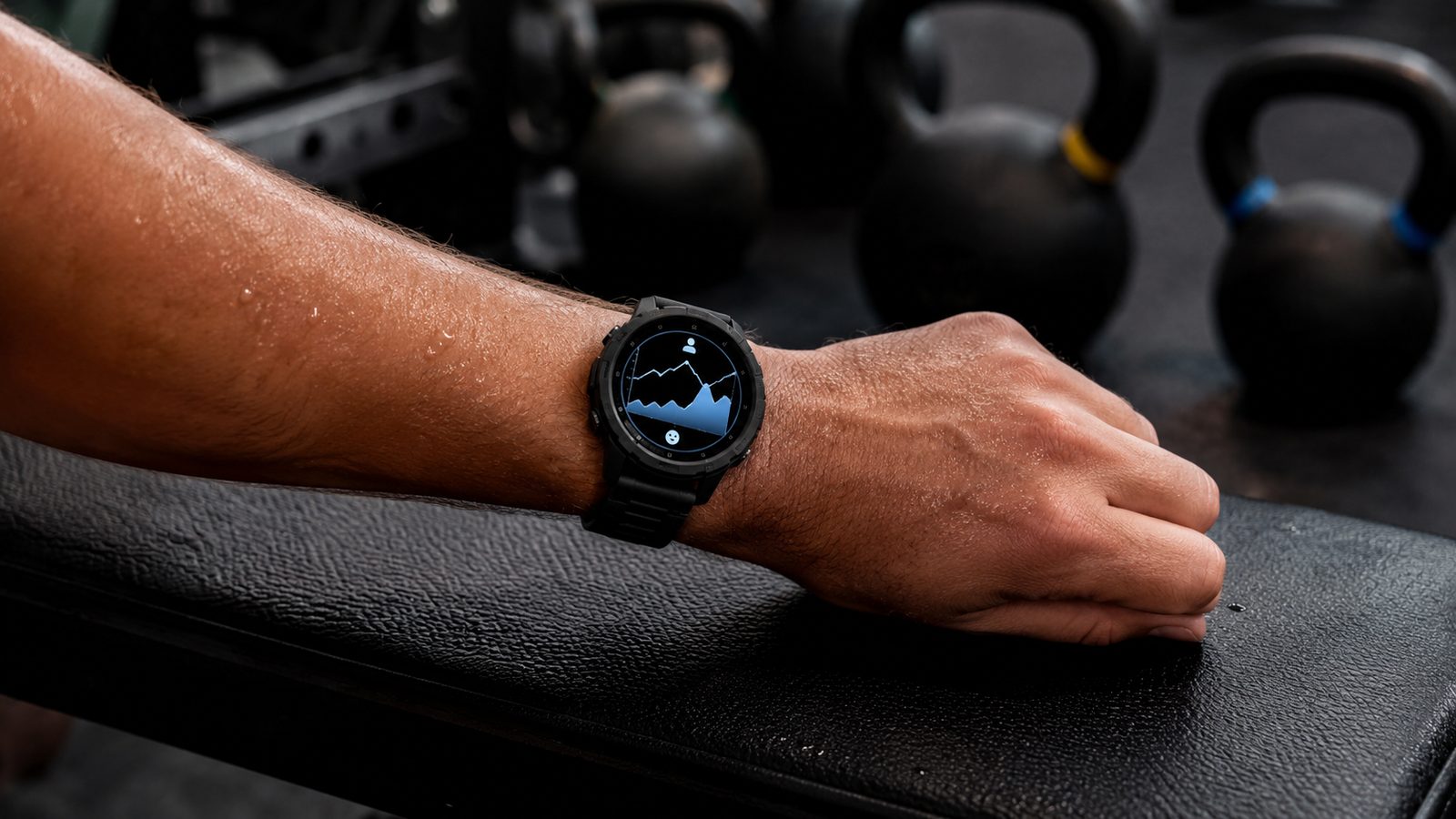
That pattern is good news for Body Battery specifically, because the metric leans most heavily on resting and sleeping data, which is where wrist sensing is at its most reliable. It is also why the overnight recharge figure is more believable than anything the score does during a hard session, and why a lifting workout or a day of heavy arm movement can leave the drain looking odd.
The wider caveat is regulatory rather than technical. No regulator has reviewed Body Battery as a medical measurement, and it does not claim to be one. The American Heart Association made the general version of this point in its 2025 scientific statement on cuffless blood pressure wearables: commercialisation has run ahead of validation, and clearance by itself does not guarantee that a measurement is accurate. Read the score as a rough daily summary of your own trend, not as a physiological fact.
Frequently asked questions
Is Body Battery the same as calories or fitness level?
No. It is an estimate of available energy based on stress and recovery signals, separate from calorie burn or measures of fitness such as VO2 max.
Why is my Body Battery low after a full night’s sleep?
Late meals, alcohol, illness, stress or poor sensor contact can suppress HRV-based recovery estimates even after adequate time in bed. One off reading is rarely worth acting on.