Key Takeaways: Smart Glasses and Your Health: What They Track, and the Privacy Trade-Off
- Most current health value is indirect rather than clinical.
- Claims that face-worn frames will soon read your vital signs the way a watch reads heart rate are, for now, ahead of the hardware.
- The privacy trade-off you cannot skip.
Table of Contents
- What smart glasses can actually do for health today
- What is still hype
- The privacy trade-off you cannot skip
- Should you buy a pair for health reasons?
- Where this is heading
- The fitness and accessibility cases, in more detail
- Battery, comfort and the practical reality
- Why the bystander question is genuinely new
- Sources and further reading
Smart glasses went from a punchline to one of the most crowded corners of wearable tech almost overnight. In 2026 the shelves hold camera-equipped AI glasses, sport models that pipe your stats into your field of view, and lightweight frames that put a voice assistant on your face. The health angle is real but easy to overstate, and it comes bundled with a privacy question that earlier wearables never raised quite so sharply.
This article is general information about consumer health technology, not informational context. Speak with a qualified professional about your own health.
What smart glasses can actually do for health today
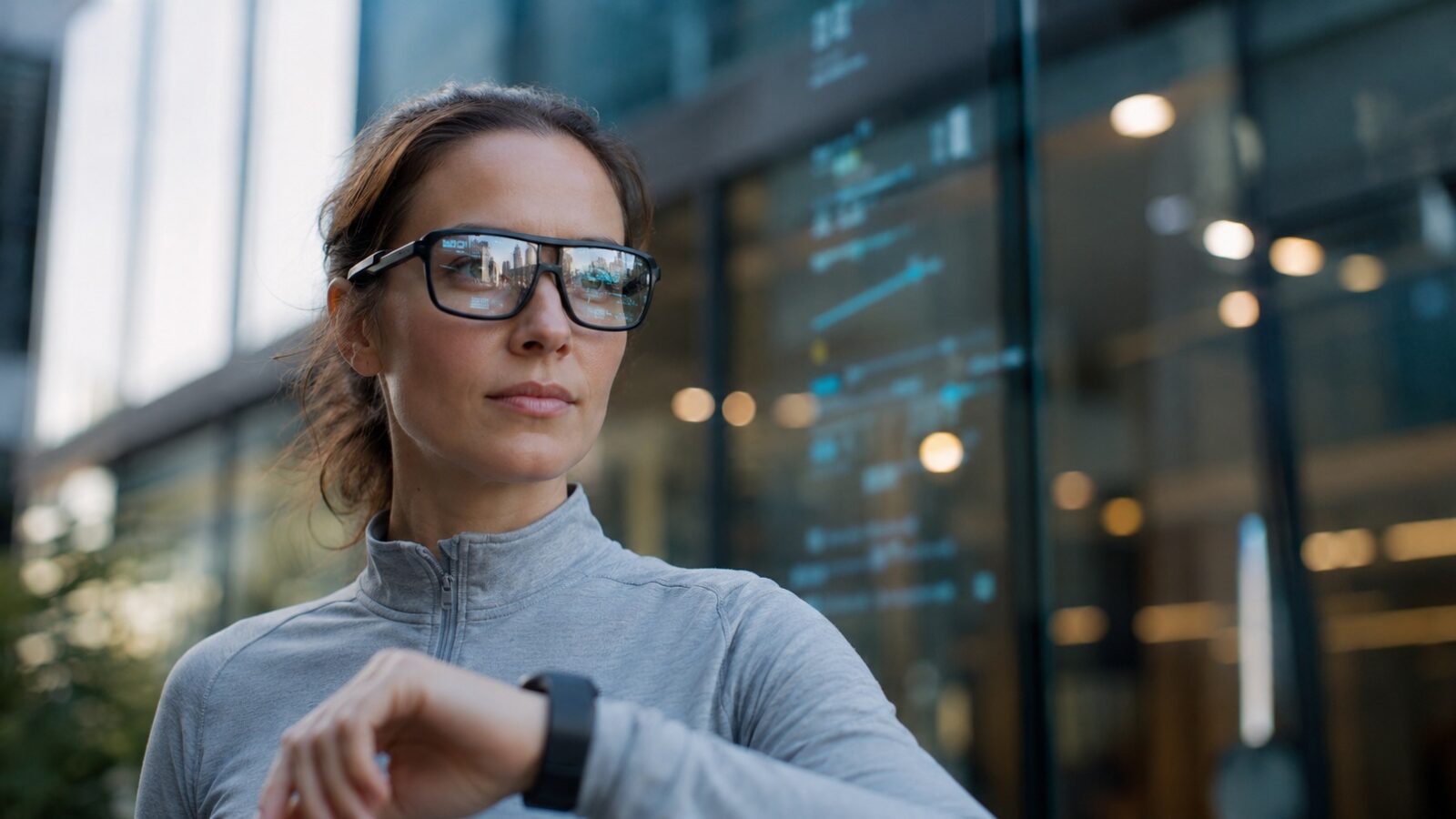
Most current health value is indirect rather than clinical. Sport-focused models can mirror metrics from a connected watch or sensor, heart rate, pace, time, calories, into a heads-up display so a runner or cyclist does not glance at a wrist. Built-in cameras and AI assistants can answer spoken questions hands-free, which has genuine accessibility uses, from reading a label aloud to describing surroundings for someone with low vision. And as a separate development, some eyewear now includes hearing assistance, which we cover in earbuds and glasses that double as hearing aids.
What is still hype
Claims that face-worn frames will soon read your vital signs the way a watch reads heart rate are, for now, ahead of the hardware. The face is a convenient place for a camera and speakers, but not yet a reliable place for the continuous optical sensing that wrists and fingers provide. So when you see a glasses product implying it tracks your body’s signals directly, apply the same scepticism we bring to any over-promising device in the digital health trends worth watching. The useful health functions today are display, audio and AI assistance, not measurement.
The privacy trade-off you cannot skip
Here is what sets glasses apart from a wrist tracker: many of them have an always-available camera and microphone pointed outward, at the world and the people around you. That raises two distinct issues. The first is your own data, where the recordings, location and voice queries go, how long they are kept, and whether they train other systems. The second, newer issue is everyone else’s privacy, because a camera on your face can capture people who never agreed to be recorded. Responsible products use a visible recording indicator, but the norms are still being written, and a thoughtful user treats the camera as a social responsibility, not just a feature.
- Check where captured photos, video, audio and AI queries are stored and whether you can delete them.
- Look for a clear, visible recording indicator and respect spaces where recording is unwelcome.
- Review what the companion app shares with the manufacturer by default, and turn off what you do not need.
- Be mindful that bystanders have not consented to your camera.
Should you buy a pair for health reasons?
If your interest is a hands-free heads-up display for workouts, or an accessibility aid, current glasses can deliver real value, and the fitness-metric mirroring pairs naturally with the training ideas in heart rate zone apps. If you are hoping for a discreet medical-grade health monitor on your face, the technology is not there yet, and buying on that promise will disappoint. As with the rest of the category, the right expectation is a useful, evolving accessory, judged by what it does today rather than what the marketing says it will do tomorrow.
Where this is heading
Glasses are likely to gain more health-relevant sensing over time, and the convergence of audio, AI and capture into ordinary-looking frames is genuinely interesting. But the defining issue for this category will not be how many vitals it can read; it will be whether the privacy model, for the wearer and for everyone in front of the lens, earns enough trust to make always-on eyewear socially acceptable. That, more than any sensor, is the question to watch.
The fitness and accessibility cases, in more detail
The most concrete health uses today cluster in two areas. For athletes, sport-oriented glasses can display metrics drawn from a paired watch or sensor, heart rate, pace, distance, in your line of sight, so a cyclist or runner keeps their eyes up rather than glancing at a wrist. For accessibility, the combination of a camera and an AI assistant can read text aloud, describe a scene, or translate signage in real time, which can be genuinely useful for people with low vision or in an unfamiliar language. These are real, if modest, benefits, and they pair naturally with the activity-tracking ideas in our fitness coverage.
Battery, comfort and the practical reality
As with hearing glasses, the practical limits matter. Cameras, displays and AI processing are power-hungry, so many smart glasses last hours rather than a full day, which makes them situational tools rather than constant companions. Comfort, weight and how ordinary they look also shape whether you actually wear them, and a device that lives in a drawer tracks nothing, the same lesson that applies to any wearable. Before buying for a health reason, it is worth being honest about whether the feature you want justifies wearing a computer on your face all day.
Why the bystander question is genuinely new
Earlier wearables collected data about you. Camera glasses collect data about everyone in front of you, which is a different ethical category. People around you have not agreed to be photographed or recorded, and norms about when it is acceptable to wear recording-capable glasses, in a gym changing room, a doctor’s office, a friend’s home, are still forming. A visible recording light helps, but responsible use ultimately rests with the wearer. Treating the camera as a social act, not just a personal feature, is part of using this category well, and it is the issue most likely to decide whether always-on eyewear becomes broadly accepted.