Key Takeaways: Best Smart Rings for Sleep Apnea Monitoring 2026
- Smart rings can surface overnight trends such as blood oxygen dips and movement, but they do not test for sleep apnea.
- Use ring data to decide whether a conversation with a clinician is worth having, not to rule a condition in or out.
- Comfort, battery life and consistent nightly wear matter more than any single advertised sensor.
Smart rings have become one of the most comfortable ways to collect overnight data, and interest in using them for breathing-related sleep concerns has grown quickly in 2026. It helps to start with a clear expectation: a consumer ring can highlight patterns worth noticing, but it cannot confirm or rule out sleep apnea. That distinction shapes everything else about how to choose and use one.
What a ring can actually observe overnight
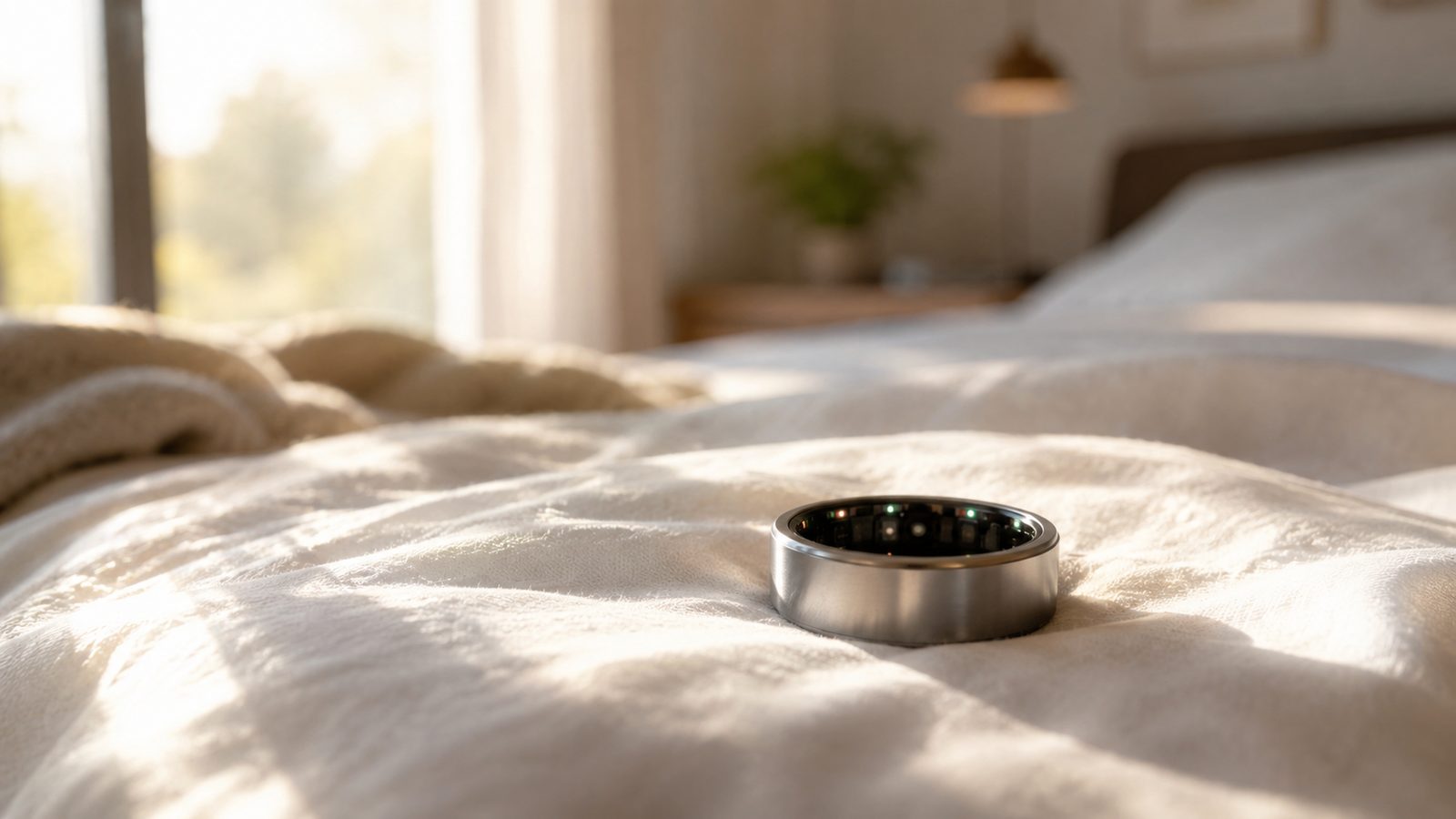
Most health-focused rings combine a photoplethysmography (PPG) sensor for heart rate and estimated blood oxygen (SpO2), an accelerometer for movement, and a skin-temperature sensor. Together these can show overnight SpO2 dips, restlessness and heart-rate patterns. Those signals can be useful for spotting a trend over several weeks, which is closer to a prompt than a result.
For a broader view of how overnight oxygen readings should be interpreted, our guide to what SpO2 can and cannot tell you applies equally to rings: a single low number on one night is rarely meaningful on its own.
Why a ring is not a sleep study
A clinical sleep assessment measures airflow, breathing effort, oxygen and often brain activity in a way no ring can replicate. Consumer devices estimate rather than measure, and they miss the specific events clinicians count. If overnight readings, daytime tiredness, loud snoring or witnessed pauses in breathing concern you, that is a reason to speak with a clinician rather than to adjust anything based on the ring alone. Our overview of what home devices miss explains the gap in more detail.
What to compare before buying
Prioritize comfort and fit, since a ring only helps if you wear it every night. Look at battery life, how clearly the app shows overnight SpO2 and trends rather than just a score, and the company’s data-privacy policy. Subscription costs and whether historical data stays available without an ongoing fee are also worth checking. Advertised sensor counts matter far less than consistent, readable trend data you will actually use.
Using the data sensibly
Treat the ring as a way to gather questions, not answers. If you notice a recurring pattern, take a short summary to an appointment rather than trying to manage it yourself. The most useful outcome of any wearable is a better-informed conversation with a qualified professional.
What a ring can see overnight, and what it cannot
A ring is a better platform than a watch for overnight optical sensing, because the finger has denser capillary beds and the fit is tighter, so there is less motion artefact and better signal quality while you sleep. That is a real advantage, and it is still not a sleep study.
The signals available are oxygen saturation estimated optically, heart rate, heart rate variability and movement. A sleep study measures airflow, respiratory effort, brain activity and oxygen saturation together and produces an apnoea-hypopnoea index. The FDA’s material on pulse oximetry sets out the limits of the optical estimate itself, and it has proposed updated recommendations after evidence that accuracy varied across skin tones. An index derived from proxies is not the index a clinician diagnoses from.
The stakes make the distinction worth holding onto. The NHLBI notes that untreated sleep apnoea increases the risk of stroke, heart attack and other serious problems, as well as affecting concentration, memory and decision-making during the day. That is an argument for following up a flag properly, and equally an argument for not treating a clear overnight report as an all-clear when the daytime symptoms are present.
Read a ring’s apnoea feature as a smoke detector rather than a diagnosis. It is watching for a pattern worth investigating, in a place nobody else is watching, which is a useful job. What it cannot do is tell you the severity, the type, or whether treatment is needed, and none of the manufacturers claim otherwise in their documentation even where the marketing implies it.
Frequently asked questions
Can a smart ring diagnose sleep apnea?
No. A ring may flag patterns such as overnight oxygen dips, but a diagnosis requires an appropriate clinical assessment. The data is best used to decide whether to seek that assessment.
Is ring SpO2 accurate enough to rely on?
Ring SpO2 is an estimate and can be affected by fit, movement and skin contact. It is reasonable for spotting trends over time, but not for precise medical readings.