Key Takeaways: Sleep Apnea Tracking at Home: What Consumer Devices Miss
- A wearable may estimate oxygen saturation, movement, pulse and sleep timing.
- Data gaps, sensor failure and quiet breathing events can reduce detection.
- Low readings can occur because of poor contact, cold hands, movement or another health issue.
Table of Contents
- What consumer products can observe
- A normal-looking score can miss a real problem
- An abnormal alert is not a diagnosis
- Home sleep tests are different from wellness wearables
- How to prepare useful information for an appointment
- Privacy in the bedroom
- What family members can observe without becoming monitors
- Weight, age and anatomy are only part of risk
- Related topics
- Screening is not the same as diagnosis
- The final judgement
- Why screening is not diagnosis
Watches, rings and bedside devices increasingly display oxygen trends, breathing disturbances or snoring estimates. These features can draw attention to a possible problem, but sleep apnea is more complex than one low number or a recording of loud breathing.
Consumer devices do not replace an appropriate sleep assessment. Seek informational context for breathing pauses, choking during sleep, persistent loud snoring, morning headaches, resistant high blood pressure or severe daytime sleepiness.
What consumer products can observe
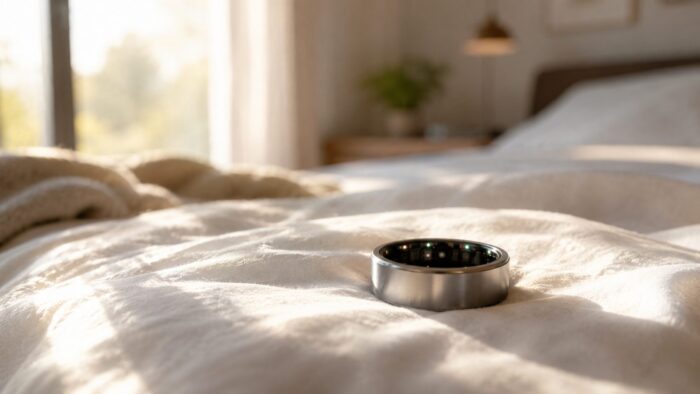
A wearable may estimate oxygen saturation, movement, pulse and sleep timing. A phone may record sound. A bedside sensor may infer breathing motion. These are indirect observations, and each can be affected by fit, skin contact, position, background noise and algorithm design.
Some devices provide a pattern that is worth discussing. They do not necessarily measure airflow, breathing effort, brain activity or the full set of signals used in a formal evaluation.
A normal-looking score can miss a real problem
Data gaps, sensor failure and quiet breathing events can reduce detection. The person may also remove the device during the night or sleep differently while monitoring. Symptoms and observations from a bed partner remain important.
Do not use a reassuring dashboard to explain away repeated breathing pauses or dangerous daytime sleepiness. Falling asleep while driving or working with machinery is a safety issue.
- Note snoring, choking and witnessed pauses.
- Record morning headaches and dry mouth.
- Track daytime sleepiness and concentration.
- Tell a clinician about relevant medical history.
An abnormal alert is not a diagnosis
Low readings can occur because of poor contact, cold hands, movement or another health issue. Repeating the measurement under better conditions may help, but persistent or concerning results need appropriate review.
An app should explain the limitation and next step. A dramatic warning without context can create fear, while a vague score may encourage false reassurance.
Home sleep tests are different from wellness wearables
A clinician-directed home test uses selected signals and a defined interpretation process. It may be suitable for some people, while others need an attended sleep study because of symptoms, other conditions or an unclear result.
The choice of test should follow clinical assessment rather than a product recommendation page.
How to prepare useful information for an appointment
Bring a short symptom history, medication list and copies of repeated device alerts. Include the dates, fit, sleep position and whether the pattern matched a bed partner’s observation. A few clear examples are more helpful than months of screenshots.
Ask what the clinician is trying to rule in or rule out and whether the device data changes the testing plan.
- Export original reports when possible.
- Avoid editing screenshots in a way that removes context.
- Do not share intimate sleep recordings publicly.
- Keep urgent symptoms separate from routine data review.
Privacy in the bedroom
Microphones and sleep recordings can capture another person’s voice. Check consent, local rules and sharing settings. Delete recordings that are no longer useful and avoid automatic cloud sharing unless the benefit is clear.
Sleep technology belongs in one of the most private rooms in the home. The privacy standard should reflect that.
What family members can observe without becoming monitors
A bed partner may notice snoring, pauses, gasping or repeated movement. These observations can be useful when described calmly and without trying to identify patterns in the cause. A short note about frequency and timing is enough.
Constant overnight recording can strain privacy and relationships. Agree on what is being recorded, why it is needed and when it will be deleted. The goal is to support assessment, not create surveillance in the bedroom.
- Describe what happened rather than naming a condition.
- Record a few representative nights.
- Get consent before audio or video recording.
- Stop recording once the information is no longer useful.
Weight, age and anatomy are only part of risk
Sleep apnea can affect people with different body types and at different ages. Family history, nasal obstruction, alcohol, sedating medicines and other health conditions can also matter. A consumer score that relies on a narrow profile may miss this complexity.
Do not dismiss symptoms because a person does not fit a stereotype. Assessment should consider the whole history.
Related topics
- How Accurate Is Sleep Tracking on Watches and Rings?
- Smart Rings for Health Tracking in 2026: A Practical Buying Guide
Screening is not the same as diagnosis
A watch may record oxygen trends, movement, heart rate or sound, but consumer devices do not reproduce the full set of measurements used in a clinical sleep study. A reassuring score therefore cannot rule out sleep apnea when symptoms remain.
The most useful home evidence may be a symptom record: loud snoring, witnessed pauses, choking awakenings, morning headaches, blood-pressure changes and severe daytime sleepiness. Share the pattern with an appropriate healthcare professional.
The final judgement
Consumer sleep devices can raise a useful question, but they cannot close the case. Symptoms, clinical assessment and an appropriate test remain the safer path when sleep apnea is a concern.
A person preparing for assessment should also note sleep position, alcohol use, nasal congestion and sedating medicines when relevant. These details can influence symptoms and help the clinician choose a suitable test. Do not stop prescribed medicine without professional advice.
Why screening is not diagnosis
Sleep apnoea is the condition where the gap between a consumer signal and a diagnosis matters most, because the consequences of leaving it untreated are serious. The NHLBI states that untreated sleep apnoea raises the risk of stroke, heart attack and other serious problems, alongside daytime effects on concentration, memory, decision-making and behaviour. That is the reason to follow up on a flag, and also the reason not to let a wearable be the final word.
Diagnosis runs through a sleep study ordered by a clinician. A consumer device is measuring proxies: oxygen saturation estimated optically at the wrist or finger, movement, heart rate variability, and sometimes breathing sounds. None of those is the apnoea-hypopnoea index a sleep study produces, and the FDA’s own material on pulse oximetry notes that these estimates have limitations and that accuracy has varied across skin tones, which it has proposed updated recommendations to address.
The failure mode that matters is the false reassurance, not the false alarm. A false alarm sends you to a clinician who finds nothing, which costs an appointment. A missed case leaves someone who snores, wakes unrefreshed and falls asleep in the afternoon believing a gadget has cleared them. If the symptoms are there, the negative result on a watch is not evidence against them.
Where these devices earn their place is as a prompt. Many people with sleep apnoea have no idea, because the events happen while they are asleep and a partner is the usual source of suspicion. A device that notices a pattern of overnight oxygen dips and nudges someone toward a proper assessment has done something genuinely useful, provided that is where it sends them.