Key Takeaways: A Bedroom Technology Audit for Better Sleep
- Spend three nights noticing the actual interruption.
- Decide whether the phone is an alarm, emergency contact, audio player or sleep tracker.
- Check chargers, power strips, clocks, routers and standby indicators.
Table of Contents
- Begin with what wakes or delays you
- Put the phone on a defined job
- Review every light source
- Decide which tracking features deserve attention
- Make the room work when the internet does not
- Protect the final part of the evening
- Repeat the audit after one week
- A low-cost order of changes
- Shared bedrooms need shared decisions
- Make one change at a time
- A calmer room usually needs fewer demands
- The order to fix things in
Many bedrooms contain a phone, watch charger, smart speaker, television, laptop, connected light and one or more sleep trackers. Each item may be useful on its own. Together they can add light, sound, alerts, cables and reasons to keep checking the time.
This audit is intended for general sleep hygiene and product setup. Ongoing insomnia, breathing problems, severe daytime sleepiness or safety concerns require appropriate healthcare advice.
Begin with what wakes or delays you
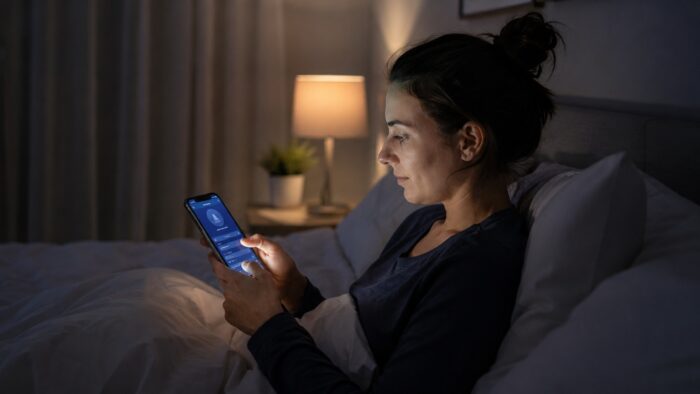
Spend three nights noticing the actual interruption. Is bedtime delayed by scrolling, does a notification wake you, is the room too bright, or does checking a sleep score create anxiety? Solve the observed problem rather than buying a product for a vague promise.
A technology audit is successful when the bedroom becomes simpler. The aim is not to remove every device.
Put the phone on a defined job
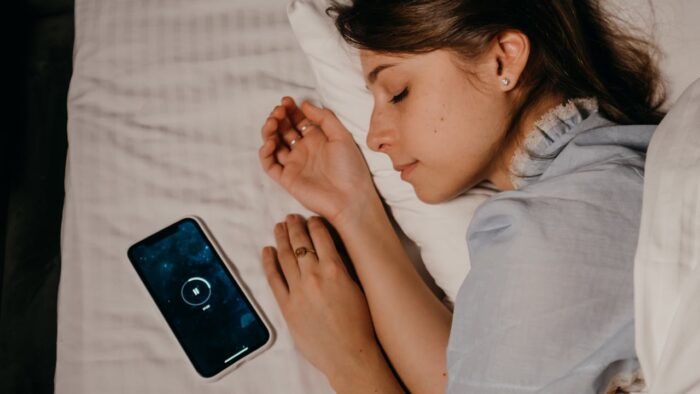
Decide whether the phone is an alarm, emergency contact, audio player or sleep tracker. Keep only the permissions and notifications needed for that job during the night.
Move the charger away from the pillow. Use do-not-disturb settings, allow only essential contacts and remove stimulating apps from the first screen. A separate alarm clock can help when the phone repeatedly returns to the bed.
- Schedule quiet hours.
- Disable nonessential badges and sounds.
- Dim the display before bedtime.
- Keep emergency access clear.
Review every light source
Check chargers, power strips, clocks, routers and standby indicators. Cover or move unnecessary lights rather than making the room difficult to navigate. Connected bulbs should still work with a physical switch if the network fails.
Use evening light to support a gradual wind-down, but avoid turning color settings into another task. A simple warm, dim lamp may be enough.
Decide which tracking features deserve attention
Hide sleep-stage details if they lead to repeated checking. Keep only measurements that support a practical change, such as bedtime consistency or time in bed. A device does not need to monitor every night to be useful.
Review microphones, bedroom sound recordings and cloud history. Delete data that no longer answers a question.
Make the room work when the internet does not
An alarm, light and basic temperature control should remain usable during an outage. Check whether voice-controlled devices have physical buttons and whether an app login is required for ordinary functions.
Offline operation also reduces the pressure to keep old accounts active.
- Test the alarm without Wi-Fi.
- Label physical controls if several people use the room.
- Keep cables away from walking paths.
- Remove devices that have no current purpose.
Protect the final part of the evening
Choose a repeatable stopping point for work, news and social media. Replace it with an activity that does not invite endless continuation, such as a shower, paper book, stretching or quiet preparation for the next day.
The routine does not need to be perfect. A consistent cue is more useful than a complicated sleep protocol.
Repeat the audit after one week
Ask whether bedtime is easier, awakenings are reduced and the room feels calmer. If nothing changed, the problem may not be technological. Pain, stress, medication, breathing problems and irregular schedules can all affect sleep.
Keep the changes that helped and reverse the ones that added effort. Better sleep is not measured by the number of devices removed.
A low-cost order of changes
Start with settings before buying equipment. Silence notifications, move the charger, reduce screen brightness and remove unused devices. Then address physical issues such as light leakage, cable clutter or an uncomfortable alarm.
Only after the simple changes have been tested should a new product enter the room. This order reduces waste and makes it easier to tell whether the purchase solved anything.
- Change settings.
- Move or remove existing devices.
- Test the room for one week.
- Buy only for a remaining problem.
Shared bedrooms need shared decisions
One person’s sleep device can disturb another person with light, sound, vibration or recording. Discuss schedules and privacy before changing the room. A solution that improves one sleeper’s routine while repeatedly waking the other is not a solution.
Use separate controls where possible and agree on which devices remain active overnight.
Make one change at a time
Changing notifications, lighting, temperature and alarm routines on the same night makes it hard to know what helped. Start with the clearest interruption, keep the change for several nights and note whether bedtime or awakenings improve.
If sleep remains poor despite a calmer room, look beyond gadgets. Pain, breathing problems, shift work, medication, stress and insomnia may need a different kind of support.
A calmer room usually needs fewer demands
A better sleep environment usually comes from fewer interruptions and clearer routines, not more gadgets. Keep the technology that solves a real problem and remove the rest.
Temperature and noise should be considered alongside screens. A smart thermostat or speaker can help, but basic fixes such as bedding, ventilation, door seals or a quieter alarm may solve the problem with less data collection and fewer nighttime controls.
The order to fix things in
A bedroom technology audit is most useful when it follows the order of effect, and the order is not the order of expense. Consistency of sleep and wake timing, darkness, temperature and noise come first, and the CDC’s sleep material and the NHLBI’s guidance on sleep deprivation cover why. Nothing you buy compensates for going to bed at wildly different times.
On screens, be precise about which claim you are acting on. The evening light question is about total light reaching your eyes and when, so dimming the room and putting the phone down earlier are the interventions that follow from it. Filtering a slice of the spectrum through a lens is a different claim, and it has been tested: Cochrane’s 2023 review of 17 randomised trials found blue-light filtering spectacles probably make no difference to eye strain, with any sleep effect currently unclear.
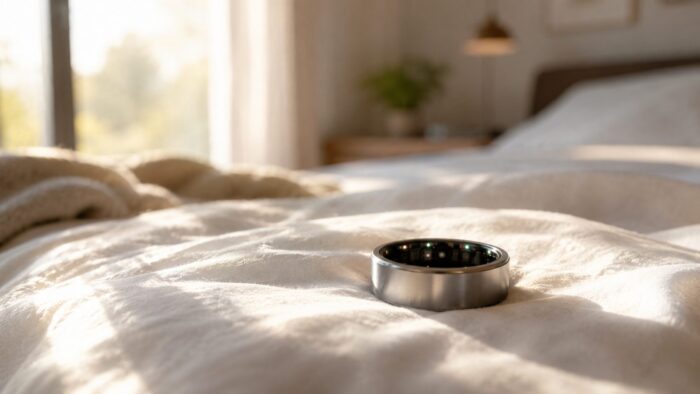
Sleep trackers belong in the audit too, and sometimes on the way out. They are at their most reliable overnight, but a nightly score can create anxiety that damages the thing it is measuring. If checking the number is the first thing you do each morning and it sets the tone of your day, that is a reason to stop looking daily rather than to buy a better one.
And if the problem is persistent rather than environmental, the audit has the wrong target. For chronic insomnia, the American College of Physicians guideline recommends cognitive behavioural therapy for insomnia as the initial treatment for all adults, and the NHLBI’s insomnia material describes when to seek help.