Key Takeaways: Do Posture Correctors With Sensors Actually Work for Desk Workers?
- Sensor-based posture devices buzz when you slouch; they build awareness rather than fixing posture directly.
- Short-term reminders can help form a habit, but lasting change comes from movement, breaks and a better setup.
- There is no single ideal posture; varying position throughout the day matters more than holding one pose.
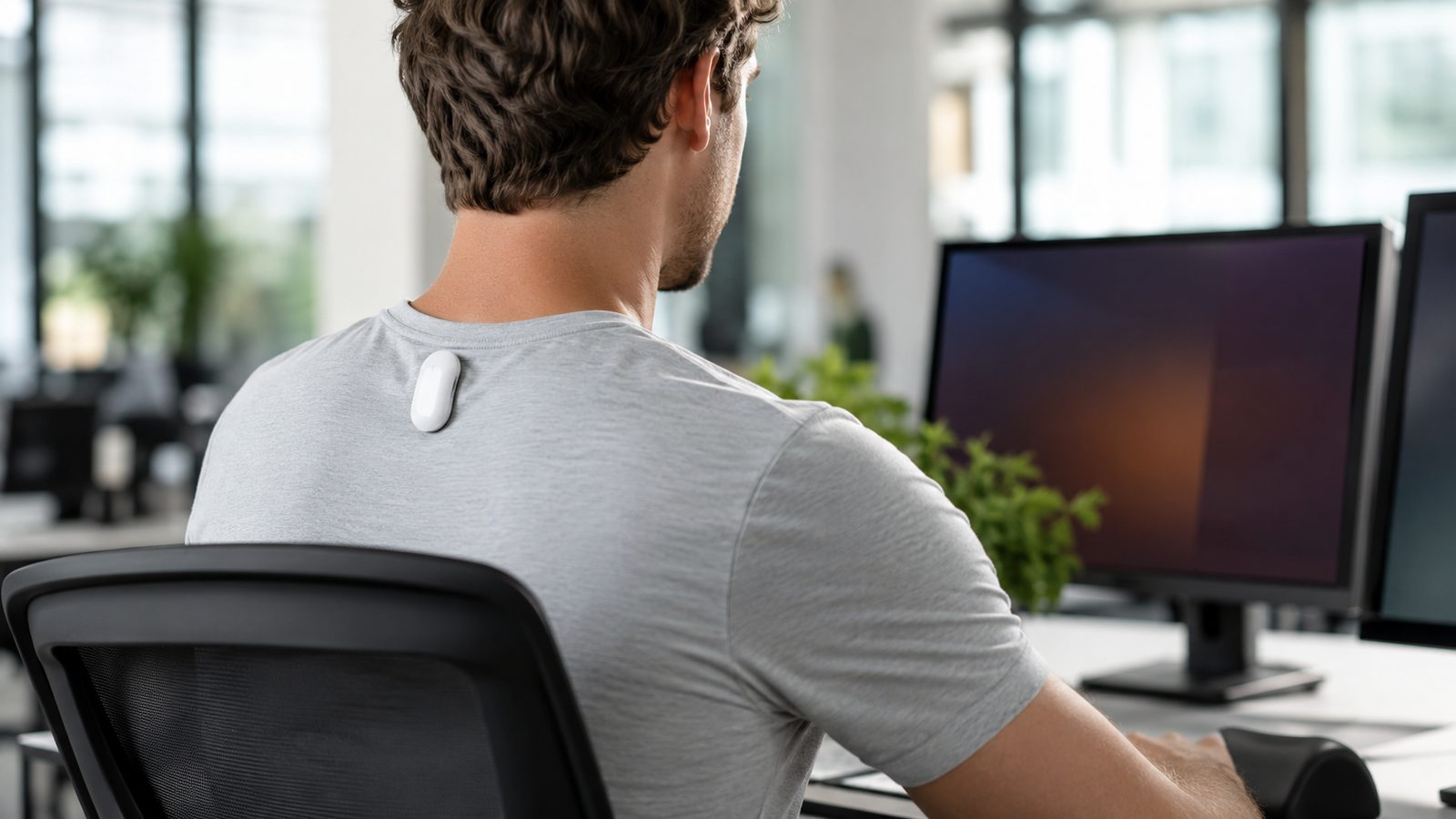
Wearable posture correctors with sensors promise to fix the slouch that comes with long desk hours. They typically clip to the upper back or chest, detect when you lean forward, and vibrate as a reminder to straighten up. Whether they work depends on what you expect them to do.
How sensor posture devices work
These devices use motion sensors to detect the angle of your upper back or neck. When you hold a forward-leaning position beyond a set threshold for a while, a gentle vibration prompts you to readjust. Some pair with an app that logs how often you slouch. The mechanism is feedback and awareness, not physical support, which is an important difference from a rigid brace.
What they can and cannot do
The realistic benefit is heightened awareness. Many people genuinely do not notice when they slump, and a buzz can interrupt the pattern often enough to build a habit over a few weeks. What the device cannot do is strengthen muscles or correct posture on its own. Relying on a passive brace-style corrector for long periods may even let supporting muscles do less work. The most durable improvements come from movement and setup, not from the gadget alone.
What actually helps desk workers most
Frequent position changes, standing or walking breaks every 30 to 60 minutes, a screen at eye level, and basic strengthening for the back and core tend to matter more than any single device. A sensor reminder can be a useful nudge layered on top of these, and it pairs naturally with broader habit tools, much like the reminders discussed in our technology audit for better routines. If you have persistent pain, that is a reason to consult a clinician rather than self-managing with a gadget.
So, are they worth it?
As a short-term awareness tool, a sensor posture corrector can be helpful for people who slump without realising it. As a standalone fix, it is limited. Think of it as training your attention while the real work happens through movement, ergonomics and consistency.
What the ergonomics guidance actually says
The reference most of these products implicitly appeal to is OSHA’s computer workstation guidance, and it is worth reading because it points somewhere slightly different from where a buzzing sensor points.
OSHA defines a neutral working posture as one where the joints are naturally aligned: head level and facing forward, in line with the torso, shoulders relaxed with the upper arms hanging naturally, elbows bent between 90 and 120 degrees and kept close to the body, hands, wrists and forearms straight and roughly parallel to the floor, the lower back supported, and the feet either flat on the floor or on a footrest.
The more important half of the guidance is what it says about holding that position. It states that staying in a single posture for long stretches is itself unhealthy, and it presents four reference postures rather than one: upright sitting, standing, declined sitting and reclined sitting. All four can be neutral. The recommendation is to move between them through the day, adjust the chair periodically, stretch the hands, arms and torso, and take walking breaks.
That creates an awkward fit with a device tuned to one correct angle. A sensor that vibrates whenever your trunk leaves a calibrated position is, in effect, penalising the postural variation the guidance asks for. The products that survive this objection are the ones that prompt you to change position or take a break, rather than the ones that train you to hold still.
One boundary worth being clear about. None of these devices is reviewed or authorised as a treatment for back pain, and wearing one is not a therapy. They are general wellness products, which is why they can ship with posture claims without going through a regulatory review, and why a persistent or worsening back problem belongs with a clinician rather than with a strap.
Frequently asked questions
Will a posture corrector permanently fix my posture?
Not by itself. It builds awareness in the short term. Lasting change usually comes from regular movement, a better desk setup and strengthening exercises.
Are sensor versions better than brace-style ones?
Sensor versions encourage your own muscles to respond, whereas passive braces provide support that muscles can become reliant on. Many people find the feedback approach more useful for habit-building.