Key Takeaways: Breathing Apps for Stress: How to Use Paced Breathing Safely
- Paced breathing is a skill, not a performance score.
- New or severe shortness of breath, chest pain, fainting, blue lips, severe allergic symptoms or another urgent concern needs appropriate medical assessment.
- People with panic symptoms may find breath focus calming or uncomfortable.
Table of Contents
- Paced breathing is a skill, not a performance score
- Choose cues that reduce attention rather than demand it
- Do not use the exercise to delay urgent care
- Context changes the experience
- Privacy should match the simplicity of the tool
- Build a cue into an ordinary routine
- Common mistakes make breathing feel harder
- A simple starting method
- Biofeedback features need realistic interpretation
- Children and older adults may need a different pace
- Keep the practice comfortable and optional
- What the evidence actually supports
- When breathing is not enough
- How to tell if it is actually helping
- Sources and further reading
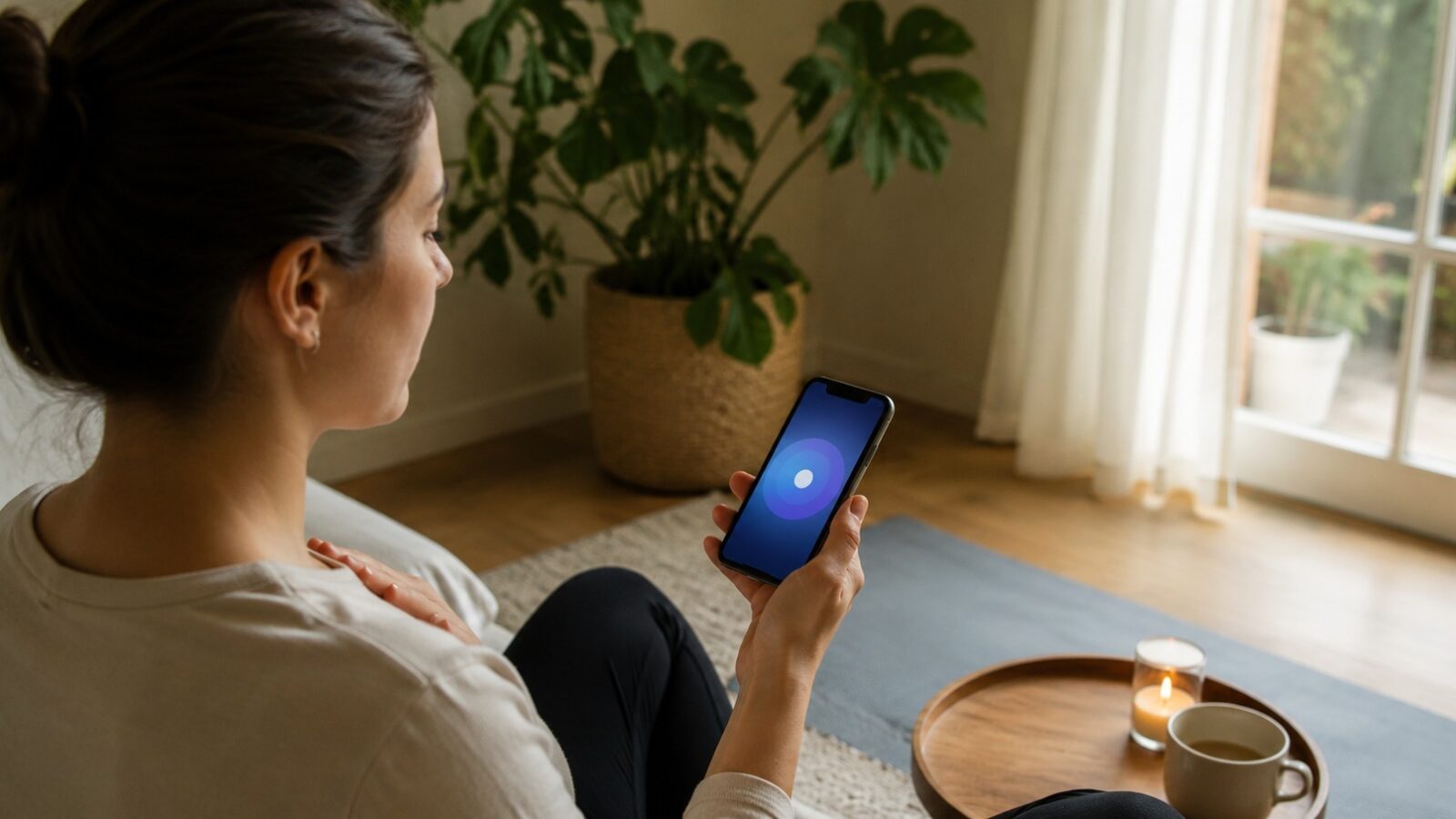
A breathing app can be one of the simplest digital wellbeing tools. It gives a visual, sound or vibration cue for slower breathing and helps a person practise for a few minutes. The exercise may reduce a sense of tension for some users, but it is not a test of lung health and it should not be used to explain away serious breathing symptoms.
This article is general information about consumer health technology, not informational context. It cannot identify patterns in a condition or replace a qualified professional. Speak with a clinician about your own health.
Paced breathing is a skill, not a performance score
The aim is comfortable, steady breathing. A very slow target may feel unpleasant, particularly for beginners or people who become focused on bodily sensations. Start with a natural rhythm and shorten the session if dizziness, tingling, air hunger or panic increases.
The app does not need to display heart coherence, stress age or another proprietary score for the exercise to be useful.
Choose cues that reduce attention rather than demand it
- A gentle expanding shape may work for visual users.
- Vibration can help when looking at a screen is distracting.
- Audio should be optional in shared spaces.
- The pace should be adjustable.
- A session should be easy to stop immediately.
Do not use the exercise to delay urgent care
New or severe shortness of breath, chest pain, fainting, blue lips, severe allergic symptoms or another urgent concern needs appropriate medical assessment. A calming exercise may change anxiety, but it cannot identify the cause of breathing difficulty.
Context changes the experience
People with panic symptoms may find breath focus calming or uncomfortable. Trauma, respiratory conditions, pregnancy and some medical treatments may also change what feels suitable. A qualified professional can help adapt the practice when symptoms are complex.
Privacy should match the simplicity of the tool
A basic breathing timer does not need contacts, location, microphone access or a detailed mental-health profile. Review permissions and avoid entering private history unless the feature clearly needs it.
For a wider mental-health app review, use the checklist on how to evaluate a mental health app. It covers evidence, crisis support, subscriptions and deletion.
Build a cue into an ordinary routine
A short session before a difficult call, after commuting or during a work break may be easier to maintain than a long daily target. The aim is to recognize the skill without needing a streak.
Some users may prefer a guided meditation app or brief journaling. The better tool is the one that supports a clear, low-risk purpose without adding pressure.
Common mistakes make breathing feel harder
Taking very large breaths, forcing the exhale or trying to match a pace that is too slow can cause light-headedness. The breath can remain quiet and comfortable. Stop, return to normal breathing and sit down if symptoms develop.
A simple starting method
- Sit comfortably with the shoulders relaxed.
- Choose a pace only slightly slower than usual.
- Practise for one or two minutes.
- Keep the breath gentle rather than deep.
- Finish before discomfort and review how you feel.
Biofeedback features need realistic interpretation
Some apps pair breathing with heart-rate or HRV feedback. Sensor contact and movement can affect the display, and the score does not identify patterns in stress or nervous-system health. Use it as an optional cue, not proof that the exercise worked.
Children and older adults may need a different pace
Shorter sessions, simple language and supervision may be more suitable. Anyone with cognitive impairment, respiratory disease or difficulty understanding the prompt should use a plan adapted to their needs.
Keep the practice comfortable and optional
A breathing app can make paced breathing easier to learn. It should remain a flexible support, not a diagnosis, management guarantee or reason to ignore symptoms that need professional attention.
What the evidence actually supports
Slow, paced breathing is not folklore; there is reasonable evidence that deliberately slowing the breath can shift the body toward its calming, parasympathetic state, easing the physical signs of acute stress like a racing heart. Health authorities classify relaxation techniques, including breathing exercises, as a helpful, low-risk way to manage everyday stress and support wellbeing. What the evidence does not claim is that an app or a breathing pattern treats an anxiety disorder, depression or any clinical condition on its own. The right framing is a useful self-regulation skill, the calming equivalent of stretching, rather than a therapy, and it complements the approaches in meditation apps and the evidence behind them.
When breathing is not enough
A breathing app is a fine tool for a stressful moment, but it is not a substitute for care when distress runs deeper. Persistent anxiety, panic attacks, low mood that interferes with daily life, or stress you cannot manage are reasons to talk to a professional, and a paced-breathing exercise should never be used to talk yourself out of seeking help that you need. If you are in crisis, contact local emergency services or a crisis line rather than an app. Used within those limits, breathing practice is a genuinely worthwhile, always-available skill; it simply works best as one part of looking after your mental health, not the whole of it.
How to tell if it is actually helping
Because breathing practice is subtle, it helps to judge it by effect rather than by streaks or scores. Over a couple of weeks, notice whether a few minutes of paced breathing reliably takes the edge off in a tense moment, and whether you find yourself reaching for it naturally when you need it. Those are the signs it has become a genuine skill. If instead the app’s targets and graphs are adding a layer of pressure, or you feel light-headed or more anxious during the exercise, ease off, slow down and drop the metrics. The goal is a calmer few minutes you can call on anywhere, not another performance to get right.