Key Takeaways: Biological Age Tests: What At-Home Epigenetic Kits Can and Can’t Tell You
- Most at-home biological age tests rely on epigenetics, specifically patterns of chemical tags called DNA methylation that change in fairly predictable ways as we age.
- The promise is real.
- Here is the gap the marketing tends to skate over.
Table of Contents
- What these tests measure
- The promise is real
- Why your personal result is shakier than the science
- How to get value from one anyway
- Who might genuinely benefit
- Why two tests can disagree about you
- Be wary of the test-plus-support business model
- What you can genuinely act on
- Sources and further reading
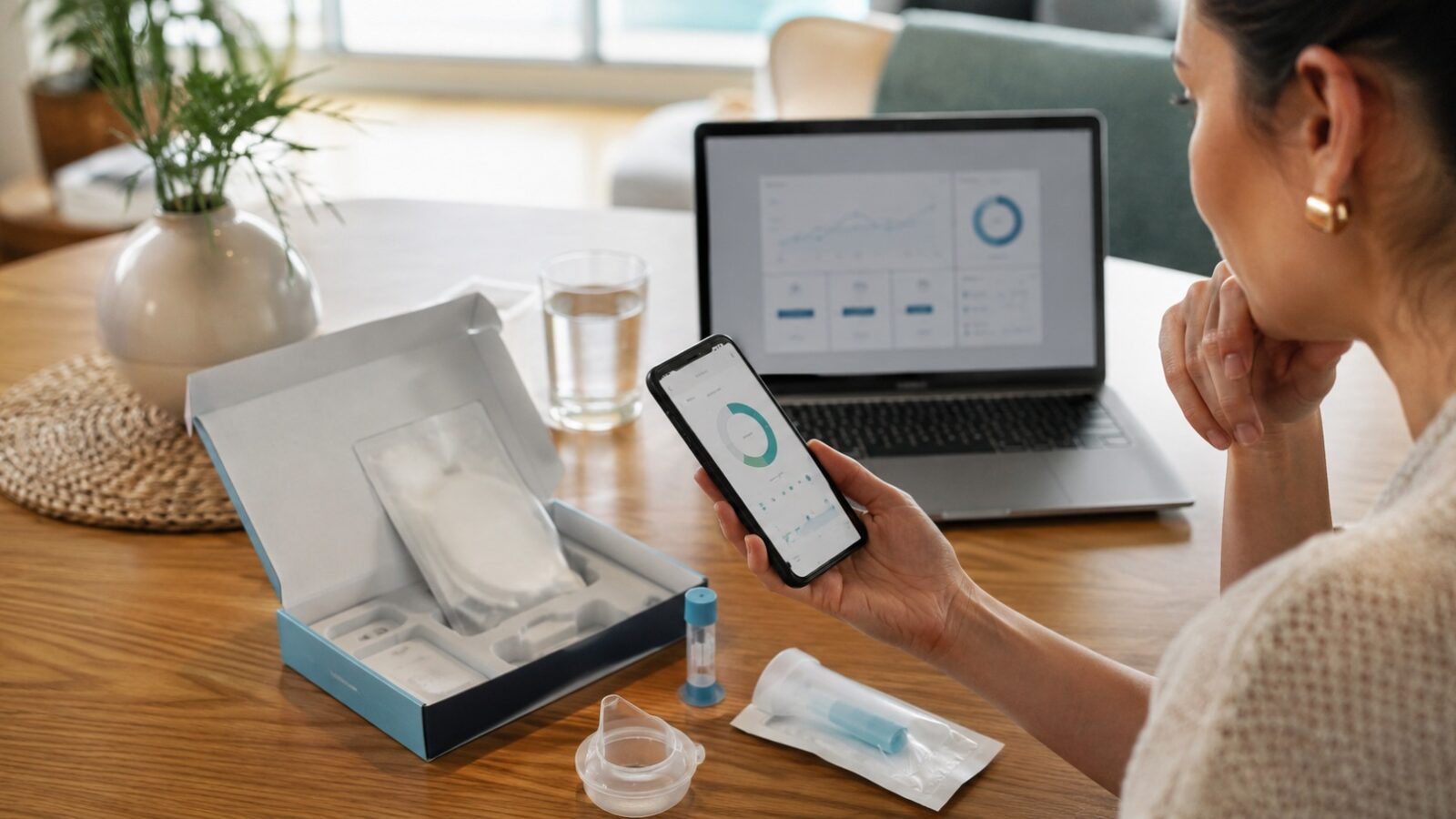
The idea is irresistible: spit in a tube or give a few drops of blood, and a lab tells you not how many birthdays you have had but how old your body actually is. Biological age testing has grown into a market worth well over a billion dollars, fuelled by the longevity movement and the promise that you can measure, and then slow, your own ageing. The underlying science is real and advancing quickly. The question for a consumer is narrower and more practical: what does the number on your report actually mean?
This article is general information about consumer health technology, not informational context. Speak with a qualified professional about your own health.
What these tests measure
Most at-home biological age tests rely on epigenetics, specifically patterns of chemical tags called DNA methylation that change in fairly predictable ways as we age. Algorithms known as epigenetic clocks read those patterns and estimate a biological age, or increasingly a pace of ageing, how fast you appear to be ageing right now. Other approaches estimate biological age from routine blood biomarkers or from physical measures like grip strength. Each captures a genuine slice of ageing, which is part of why no single one tells the whole story.
The promise is real
This is not snake oil. Epigenetic clocks perform impressively in large population studies, correlating with disease risk and mortality, and researchers are actively using them as endpoints in ageing trials. The pioneers of the field are serious scientists, and the long-term potential, catching accelerated ageing years before disease appears, is exactly the kind of preventive insight that would be valuable, in the spirit of how AI may change preventive healthcare.
Why your personal result is shakier than the science
Here is the gap the marketing tends to skate over. What works beautifully across thousands of people can be noisy for one individual on one day. Experts in the field have been candid that there are not yet agreed reference standards, meaning you cannot send samples to different validated labs and expect the same answer. Sample type matters a great deal: blood-based tests are generally far more reproducible than saliva or cheek-swab tests, and one analysis found saliva results could vary by many years. Different clocks measure subtly different things and can disagree, and a December 2025 analysis found substantial variation across more than a dozen clocks. Even a leading researcher has said his own first clock simply was not good enough to use.
In plain terms: a single result of one biological age, from one consumer kit, on one occasion, is an estimate wrapped in uncertainty. It is closer to a weather forecast than a thermometer reading.
How to get value from one anyway
- Prefer blood-based tests over saliva or cheek swabs if reproducibility matters to you.
- manage the trend over repeated tests on the same product, ideally a year or more apart, as more meaningful than a single absolute number.
- Do not compare your result across different brands or clocks; they are not interchangeable.
- Use a result as motivation for changes that help regardless, sleep, exercise, not smoking, rather than as a diagnosis.
- Be wary of any product that pairs the test with expensive supplements it claims will lower your number.
That last point matters. The most reliable ways to influence the things these tests measure are unglamorous and free or cheap, the same fundamentals behind recovery scores and good sleep. A test that exists mainly to sell you the support for the problem it just diagnosed deserves extra skepticism, the same lens we apply to marketing claims in decoding health wearable labels.
Who might genuinely benefit
People deeply engaged in tracking their health, or those working with a clinician on a longevity-minded plan, may find repeated testing a useful feedback signal, provided they understand its limits. For most people, the honest answer is that a biological age test is an interesting, motivating snapshot of a fast-moving science, not a verdict on how long you will live. Enjoy it for what it is, act on the fundamentals it points toward, and do not reorganize your life around a number the field itself is still learning to trust.
Why two tests can disagree about you
If you took two different biological age tests and got two different answers, you would not necessarily have done anything wrong; the tests may simply be measuring different things. Some clocks estimate a static biological age, a single number meant to represent how old your cells seem. Others estimate a pace of ageing, essentially how fast you are ageing right now, which is arguably more actionable because it can shift with lifestyle. Within each type there are competing algorithms trained on different data. Add the variation between sample types and labs, and you can see why a single figure should be read with humility rather than treated as a fixed fact about your body.
Be wary of the test-plus-support business model
A recurring pattern in the longevity market is a company that sells you the test and, conveniently, the supplements or program it says will improve your result. manage that loop with caution. The interventions with the best evidence for healthier ageing are stubbornly ordinary, regular physical activity, decent sleep, not smoking, a reasonable diet, managing blood pressure, and none of them require a proprietary pill. If a result is being used mainly to upsell you a remedy, the incentive behind the number is no longer purely informational.
What you can genuinely act on
The useful response to a biological age result is not to chase the number but to act on what reliably moves health in the right direction anyway. If a test motivates you to walk more, sleep better or finally quit smoking, it has done something worthwhile regardless of how precise it was. Used that way, as a nudge toward fundamentals rather than a verdict, even an imperfect test can earn its place. Used as a precise scorecard you anxiously re-check, it promises a certainty the science cannot yet deliver.