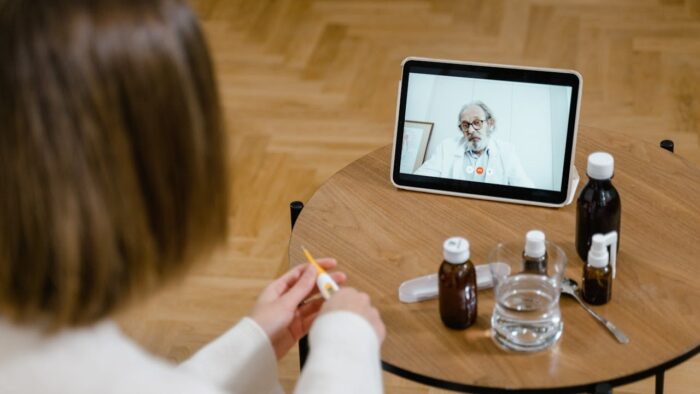
Key Takeaways: Telehealth or In-Person Care: How to Choose
- Patients often choose based on convenience, while clinicians think in terms of diagnostic safety.
- Sometimes a clinician needs the history from a virtual appointment before deciding what examination or test is necessary.
- If the appointment mainly involves discussion, review of stable readings, therapy, medication follow-up or a visible concern that can be shown clearly, telehealth may be efficient.
Table of Contents
- Choose based on what the clinician needs to do
- A referral to in-person care is not a failed visit
- A simple way to make the decision
- Problems that often work well online
- Use hybrid care when the path is uncertain
- How to avoid a wasted virtual appointment
- Privacy and safety still matter in a convenient visit
- The right channel can change during care
- Choose by the question, not the convenience
- The questions to settle before relying on it
- Which visits suit which format
Telehealth and in-person care are not rivals. They are different tools. A video visit can be perfect for medication follow-up, therapy or a simple infection. It is the wrong doorway for severe symptoms, procedures, hands-on examination or urgent testing. Choosing well saves time and reduces risk.
Read the health claims carefully. This overview of telehealth vs in-person care does not identify patterns in a condition, and it should not be used to start, stop or change medication or management.
Interest in telehealth vs in-person care is growing because people want more control over virtual visit and physical examination. Useful control comes from reliable information, realistic expectations and a clear boundary between wellness and medical care.
Choose based on what the clinician needs to do
Patients often choose based on convenience, while clinicians think in terms of diagnostic safety. The gap can lead to frustration. A virtual visit may end with advice to come in person, which can feel like wasted time. In reality, that is often the safest decision when the information available online is not enough.
A referral to in-person care is not a failed visit
Sometimes a clinician needs the history from a virtual appointment before deciding what examination or test is necessary. That can still save time by directing the patient to the right service.
The platform should explain this possibility in advance. Clear expectations reduce frustration and help patients understand that safety, not convenience, sets the final format.
A simple way to make the decision
If the appointment mainly involves discussion, review of stable readings, therapy, medication follow-up or a visible concern that can be shown clearly, telehealth may be efficient. If the clinician needs to listen to the chest, press an abdomen, test strength, perform a procedure or obtain a sample, in-person care is more likely to be appropriate.
Urgent symptoms should not be routed through a routine booking queue. Chest pain, severe breathing difficulty, sudden weakness, major bleeding, fainting or rapidly worsening illness require the appropriate urgent or emergency service.
- Send clear photos or readings before the visit when the service allows it.
- Have medication names and allergies ready.
- Ask whether a second in-person fee applies if examination is required.
- Choose a quiet place where you can speak openly.
Problems that often work well online
Telehealth works best when the problem can be assessed through history, visible signs, home readings or ongoing relationship. In-person care is better when touch, imaging, lab work, procedures or immediate vital signs are needed. Hybrid care is often ideal: online follow-up after an in-person diagnosis, or remote monitoring between visits.
Use hybrid care when the path is uncertain
A good rule is this: if the clinician mainly needs to talk, review data or adjust an existing plan, telehealth may be enough. If they need to touch, test, image, listen, stitch, inject or observe you closely, go in person.
How to avoid a wasted virtual appointment
- Booking a virtual visit for emergency symptoms.
- Assuming online care is lower quality by default.
- Expecting antibiotics without adequate assessment.
- Not preparing photos, readings and medication lists.
- Using different platforms each time with no continuity.
Privacy and safety still matter in a convenient visit
Look beyond the password screen when using telehealth vs in-person care. Advertising trackers, connected platforms and automatic sharing can move details about virtual visit and physical examination beyond the service the user originally chose.
The right channel can change during care
The better option is the one that allows a safe assessment with the least unnecessary burden. Telehealth and in-person care work best as connected choices rather than competing systems.
Choose by the question, not the convenience
Telehealth is often well suited to follow-up conversations, medication reviews, straightforward symptoms and care that depends mainly on history. In-person assessment becomes more important when touch, examination, imaging, procedures or immediate tests may change the decision.
The answer can change during the visit. A good virtual service explains when the clinician may stop and recommend urgent or face-to-face care instead of forcing every problem to fit the platform.
The questions to settle before relying on it
Before relying on the result, settle three questions: how virtual visit is measured, what can distort physical examination and who is responsible for interpreting an unusual finding.
Also decide what the product cannot do. A clear boundary around urgent symptoms prevents a wellness tool from quietly becoming a substitute for assessment or management.
If you are unsure, call the clinic before booking and describe the main symptom in one sentence. Staff may be able to direct you to the right format. This is especially useful when the concern involves a new injury, a possible infection, a need for testing or a symptom that has changed quickly. Choosing the right doorway at the start can prevent delay without forcing every problem into an emergency setting.
Which visits suit which format
The better and worse framing is the wrong one, because the answer depends entirely on the visit. HHS’s patient telehealth resource is useful here precisely because it organises the question that way: what a remote appointment can reasonably cover, and when you need to be in the room.
Remote works well where the clinical work is talking and reviewing. Medication follow-ups, mental health appointments, chronic disease check-ins with home readings, results discussions, rashes and other visible problems, and triage decisions about whether something needs urgent attention. It removes travel, waiting rooms and time off work, which is not a small benefit for anyone managing a long-term condition.
In-person wins where the clinician needs their hands or their instruments. Anything requiring palpation, listening to the chest, an internal examination, an injection or a procedure. Anything involving a new and undifferentiated symptom, where the physical examination is how possibilities get eliminated. And anything urgent: chest pain, breathing difficulty, signs of stroke and similar emergencies go to emergency services, not to a video queue.
One practical caveat about home readings, since they are what make remote chronic care work. They are only as good as the instrument. A validated upper-arm blood pressure cuff produces a number a clinician can use; the American Heart Association’s 2025 statement found cuffless wearable estimates have largely not been proven accurate for real-world use and should not drive treatment decisions. If a remote appointment depends on your readings, the money is better spent on the measuring device than on the platform.